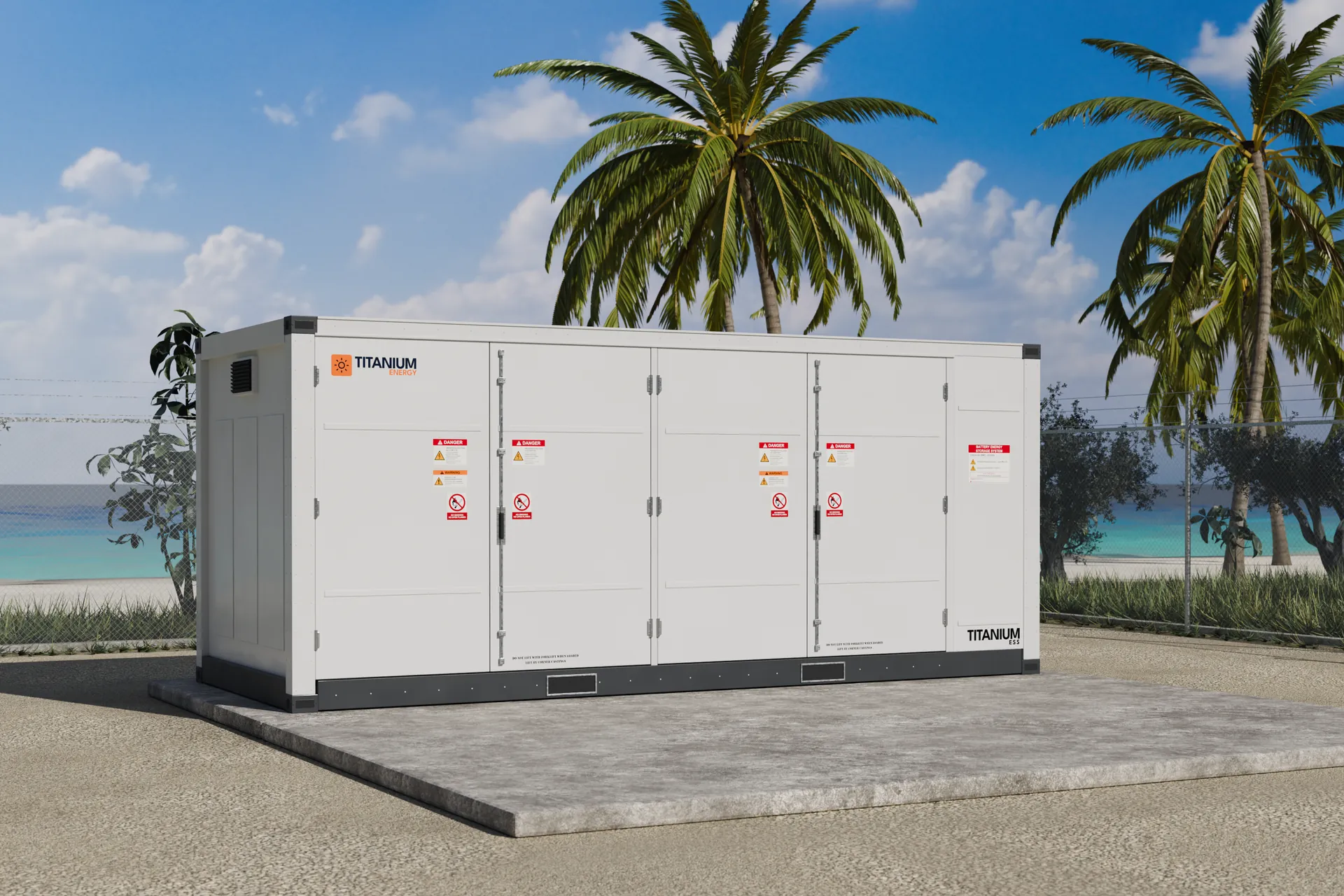
Titanium ESS-L20
Second-Life Battery Storage · 160–638 kWh
Run your site on stored solar after dark, cut generator hours and ride through outages, with one 20 ft block built around recertified Nissan Leaf packs. Built to order, supplied with the inverter and solar, and monitored by Titanium.
Full block: model ESS-L20-638
Where it pays back. One cycle a day.
Cycled once a day, one block earns its keep four ways: less fuel, smaller demand bills, more of your own solar, and power through outages.
Cut Generator Fuel
On cayes, lodges and farms, stored solar replaces generator hours that cost BZ$1 – 2 per kWh.
Lower Industrial Demand Bills†
BEL’s industrial tariffs bill demand at BZ$23 – 36 per kVA each month. A full block can take up to 160 kVA off your peak.
Use Your Own Solar
Store midday solar instead of exporting it at BZ$0.13 per kWh, and meet the PUC’s storage rule for new solar.
Ride Through Outages
Carries your site through grid outages and the evening curtailment of power imported from Mexico.
Values are indicative per block, before the inverter, solar and installation, and are confirmed by a site study. † BEL tariffs: PUC public notice of 30 December 2025, Schedule 6A, January to June 2026. Demand charges apply to BEL’s Industrial 1 (BZ$35.82 per kVA) and Industrial 2 (BZ$23.00 per kVA) classes.
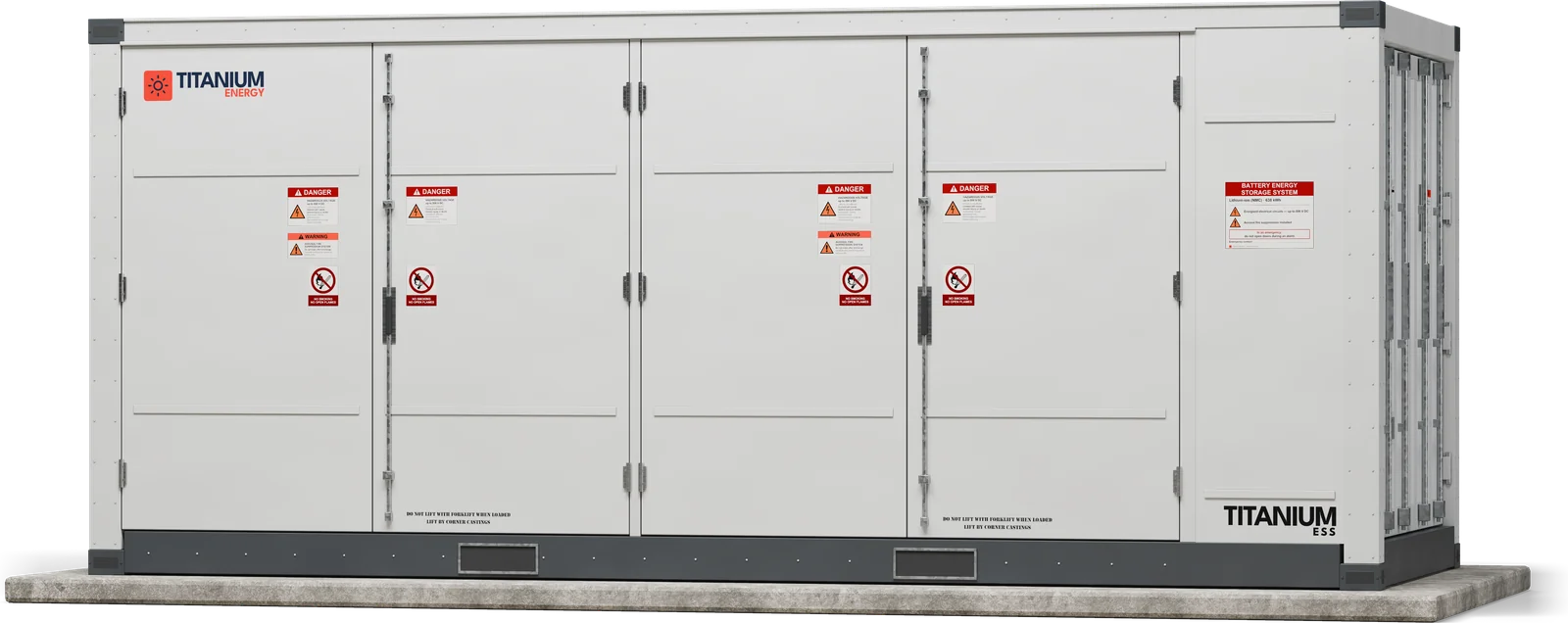
Renders are for illustration; the final product may differ.
One block. Built by the stack.
- Graded Leaf Packs
- DC Combiner
- System BMS
- Cooling and Fire
One container holds everything your site needs to store energy: the battery packs, cooling, fire protection and controls, checked together at the factory before delivery. Titanium sizes it to your loads, supplies the inverter and solar, installs it and keeps it running, replacing packs one at a time without shutting your site down. Start with one stack of six packs and add stacks as your site grows, up to four.
- IP55Outdoor
- 6–24Packs, by stack
- N+1Cooling
- EMSMonitored
Four sizes, one container
Every size runs 3.4 hours at its rated power.
40 kW rated, 80 kW peak
80 kW rated, 160 kW peak
120 kW rated, 240 kW peak
160 kW rated, 320 kW peak
Second-Life Battery Assets
- 6 to 24 OEM Nissan Leaf 40 kWh packs, added by stack, in their original enclosures
- Capacity rated on measured health: Band A, 68% SOH
- No new cells manufactured for the block
Supplied and Supported
- Inverter (PCS) and solar supplied by Titanium
- Installed and commissioned by our team
- Every pack watched on the Titanium EMS platform
Serviceability
- Every connector faces the doors
- Single-pack replacement without system shutdown
- Graded spare packs matched to each block
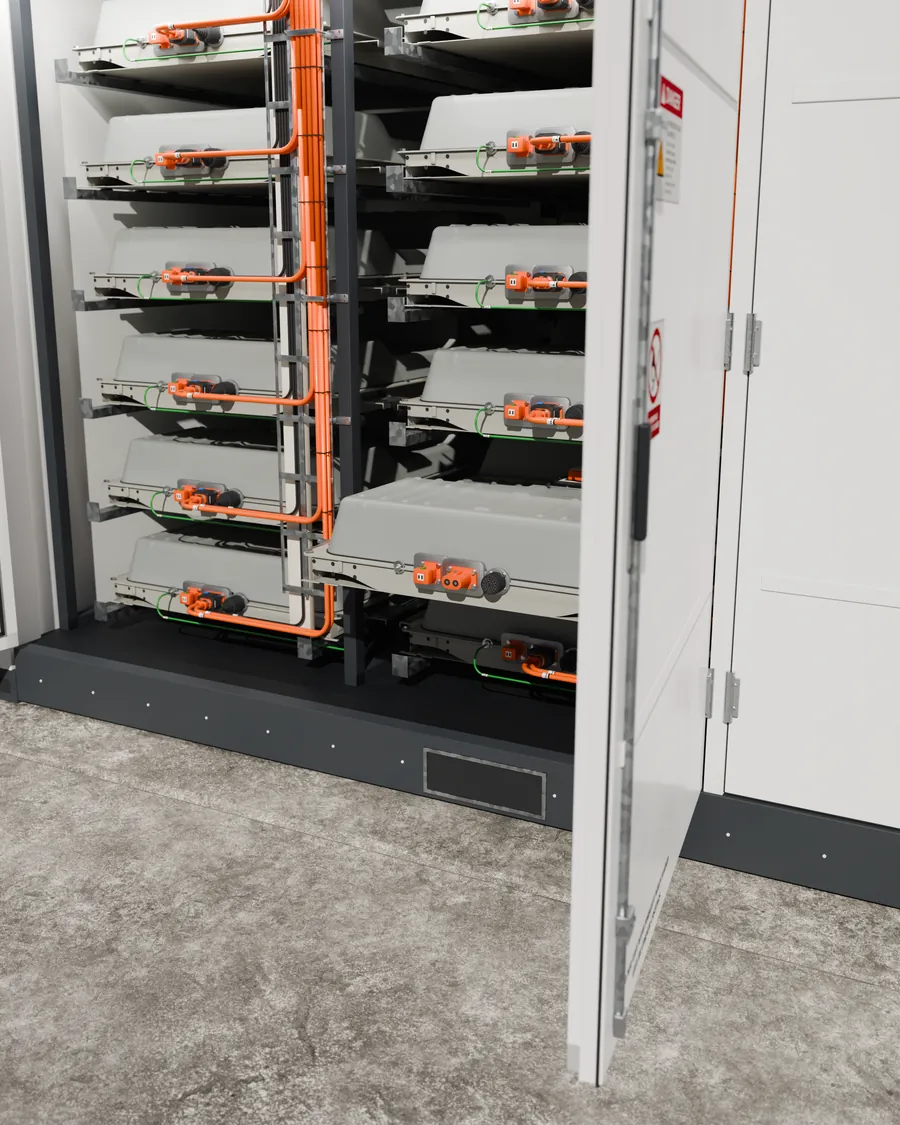
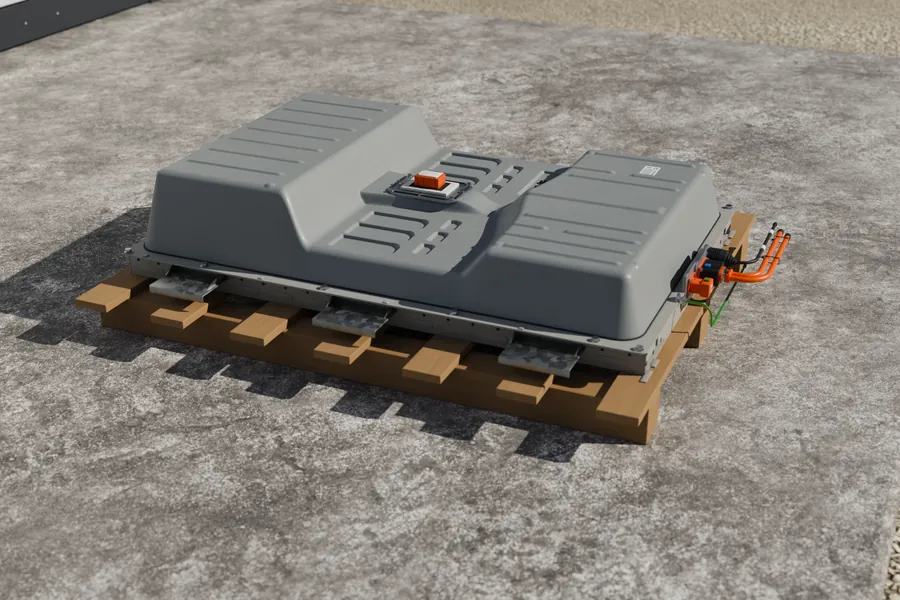
Safety in every stack. Watched every day.
Second life raises a fair question: is it safe? Every pack is graded before it goes in, every stack has its own detection and fire suppression, and the Titanium EMS platform watches every pack’s health remotely. The block is designed to NFPA 855, 68 and 69 and IEC 62933-5-2, and UL 9540A testing is in process.
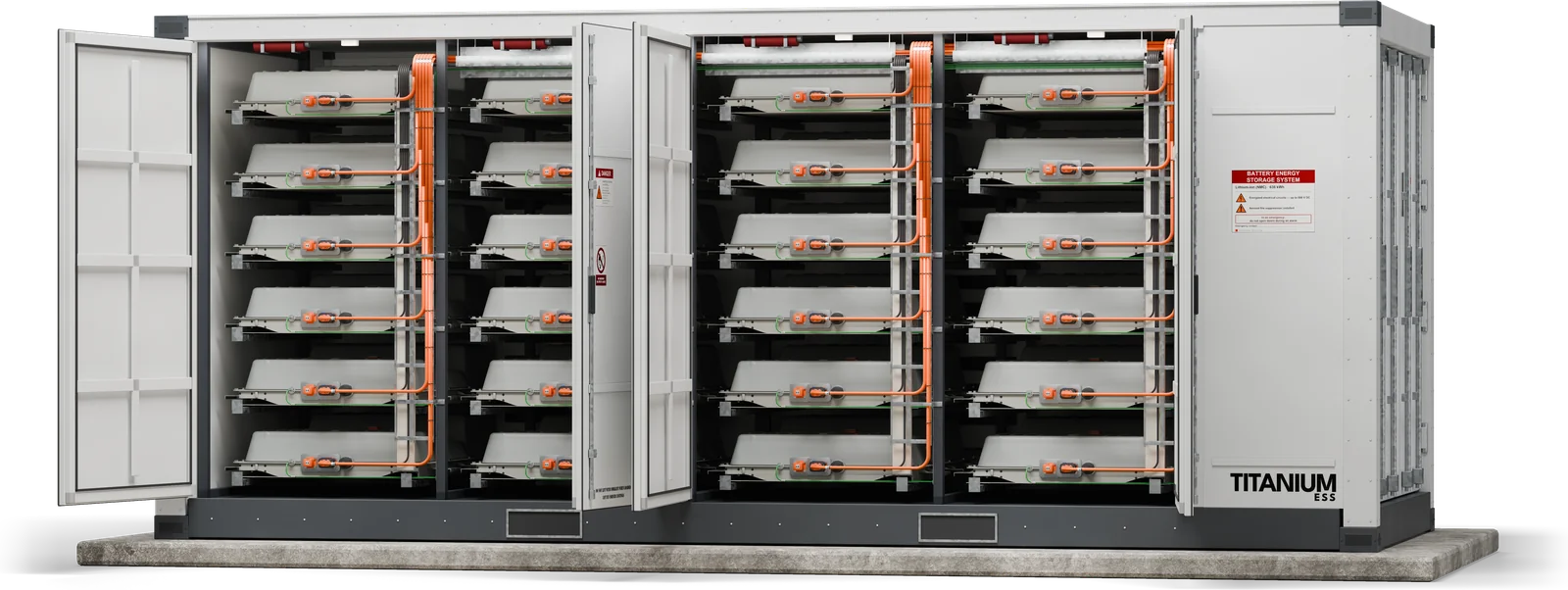
- 1Gas, smoke, heat, H₂ and CO detection in every stack
- 2Aerosol fire suppression in every stack
- 3Each pack with its own contactors and fuse‑switch
- 4Every connection made from the doors
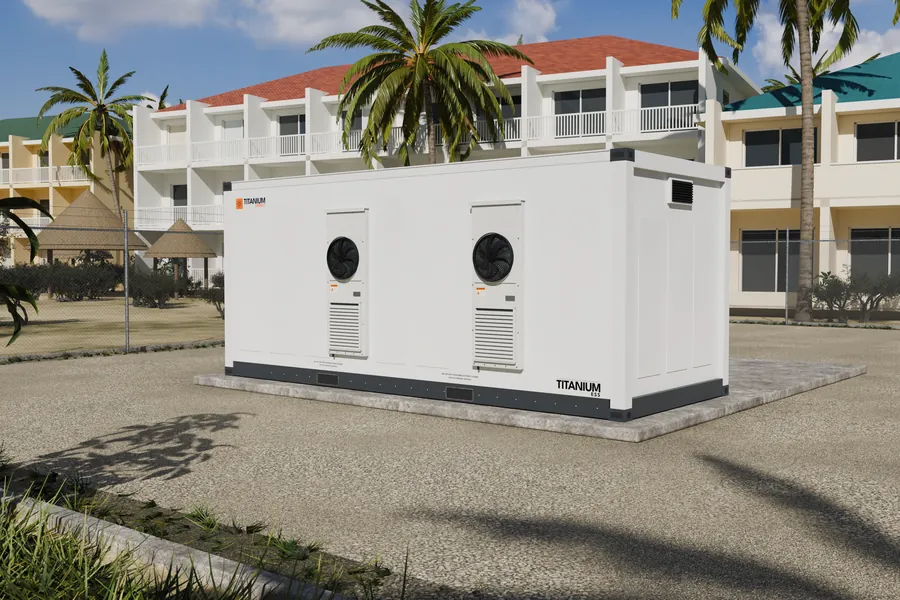
- 5N+1 cooling on the back wall, packs held at 15–30 °C
- 6Gas-alarm exhaust and roof deflagration vents
- 7Electrical room: DC combiner, switchgear, controllers
- 8Insulated steel enclosure, IP55
Renders are for illustration; the final product may differ.
Lower upfront cost. Predictable energy.
Recertified Nissan Leaf packs cost less than new cells, so the ESS-L20 stores the same energy for a smaller upfront investment. Every block is rated on the measured health of its packs, so you know what it will deliver year after year.
Renders are for illustration; the final product may differ.
Lower Upfront Cost¹
Recertified EV packs instead of newly made cells: you pay less up front than for a new-cell battery of the same usable capacity.
Rated on Measured Health
Every Nissan pack is scanned and graded, and only the top grade goes in. The block is rated at the low end of that grade, so its rating is conservative.
1.6 GWh Over 10 Years²
About 1.6 million kWh delivered by a full block over ten years at one cycle a day, allowing for the fade we measure in the field.
Renew, Don't Replace
Packs swap one at a time from the door while the block keeps running, so you top up capacity instead of replacing the system.
Monitored Every Day
The Titanium EMS platform watches every pack’s health remotely, so top-ups are planned before you notice a drop.
Our Pack Promise
If a pack’s cells drift out of balance, we replace it. If a pack fades faster than expected, within the limits in your agreement and under remote monitoring, we replace it too.
¹ Steckel, Kendall and Ambrose, Applied Energy 300 (2021); CEPS, Second-life applications for battery packs (May 2026). ² Observed field fade of 3 SOH points per year.
kWh per full block, one cycle a day
| Year | State of health | Usable energy (kWh) |
|---|---|---|
| 0 | 68% | 543 |
| 1 | 65% | 519 |
| 2 | 62% | 495 |
| 3 | 59% | 471 |
| 4 | 56% | 447 |
| 5 | 53% | 423 |
| 6 | 50% | 399 |
| 7 | 47% | 375 |
| 8 | 44% | 351 |
| 9 | 41% | 327 |
| 10 | 38% | 303 |
Year ten still delivers about 303 kWh a day, enough for the PUC’s one-hour rule on a 250 kW solar system. Graded spares swap in, so the block keeps working past year ten.
From the road to your site, and back into new cells.
Every ESS-L20 pack has already powered a Nissan Leaf. Here is how it reaches your site, how we keep it working, and where it goes next.
- 01Nissan Leaf 40 kWh
First life
Every pack starts out powering an electric car, built and crash-tested by Nissan.
- 02UL 1974-aligned grading
Recertified
Each pack is scanned, graded, checked and labelled with a QR passport. Only the top grade, 68–71% health, goes on.
- 03End-of-line test
Assembled and tested
Matched packs go in a stack at a time, six to a stack, with cooling, fire protection and controls, and the block is tested end to end.
- 04≈ 10 years · one cycle a day
Second life
On your site, the block stores solar, cuts generator hours and backs up your loads, watched every day on the Titanium EMS platform.
- 05No shutdown
Renewed
A weaker pack rolls out from the door and a graded spare takes its place. The rest keep running.
- 06Taken back by Titanium
Recycled
When a pack’s second life is over, Titanium takes it back for recycling, and its materials go back into new cells.
Materials back into new cells
State of health of one pack, from new to recycling
A new pack starts at 100% state of health and spends its first life in a Nissan Leaf. Packs graded at 68 to 71% go into the ESS-L20, which is rated from 68% and reaches about 38% after ten years at one cycle a day. The pack then goes to recycling.
New cells mean new mining, refining and energy-intensive manufacturing. The ESS-L20 needs none: the packs stay whole in Nissan’s enclosures, nothing is dismantled, and reuse comes before recycling in European waste and battery policy.³
³ The EU waste hierarchy (Directive 2008/98/EC) places preparing for re-use above recycling; the EU Battery Regulation (EU) 2023/1542 sets out the repurposing of EV batteries for a second life.
- QR passport on every pack
- UL 1974-aligned grading
- Monitored on Titanium EMS
- Taken back at end of life
Where it fits. Resorts, farms, industry and cayes.
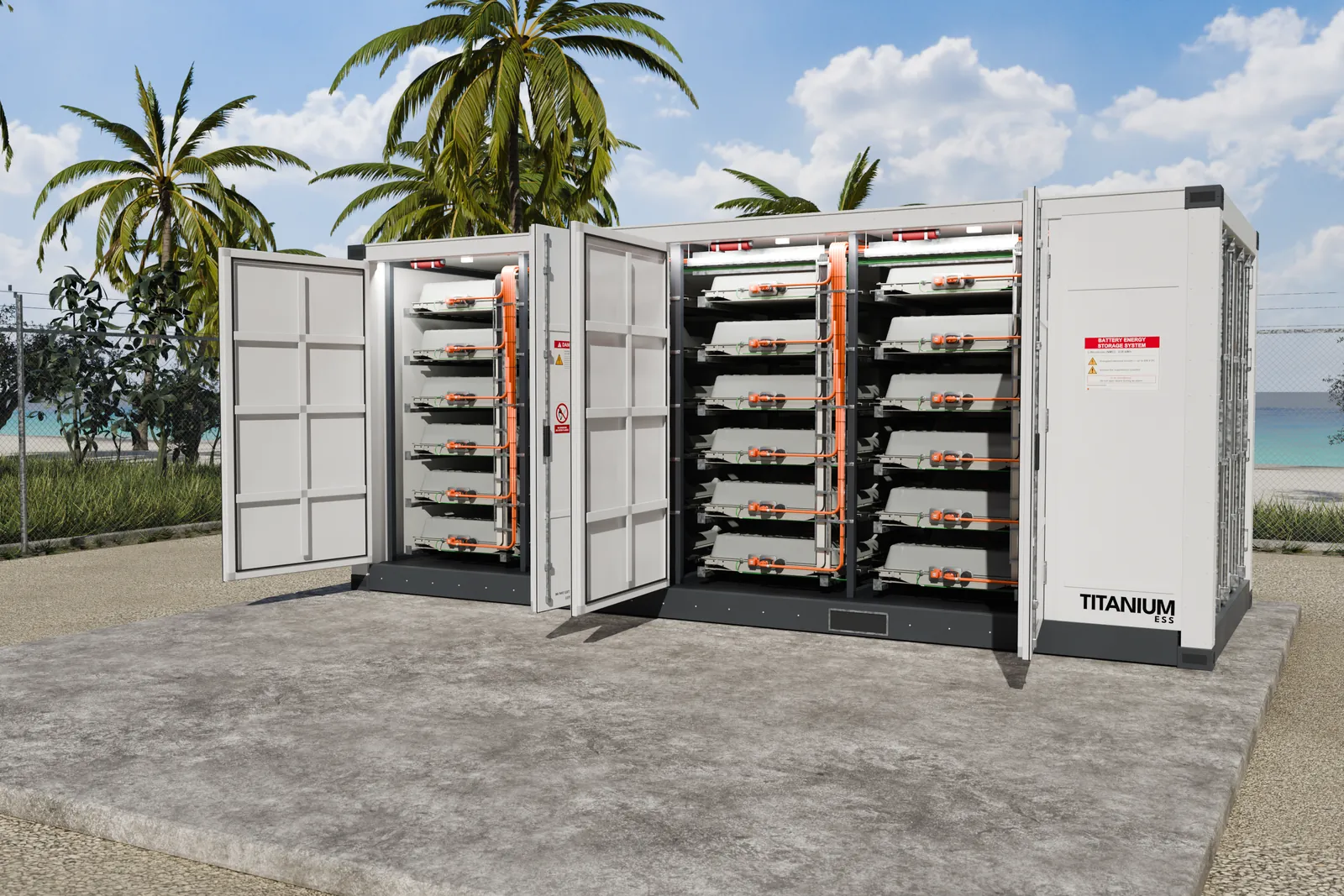
Renders are for illustration; the final product may differ.

Resorts and Lodges
Run evening air-conditioning and kitchens on stored solar, and keep the generator for backup.
- Air-conditioning
- Kitchens
- Pools and pumps
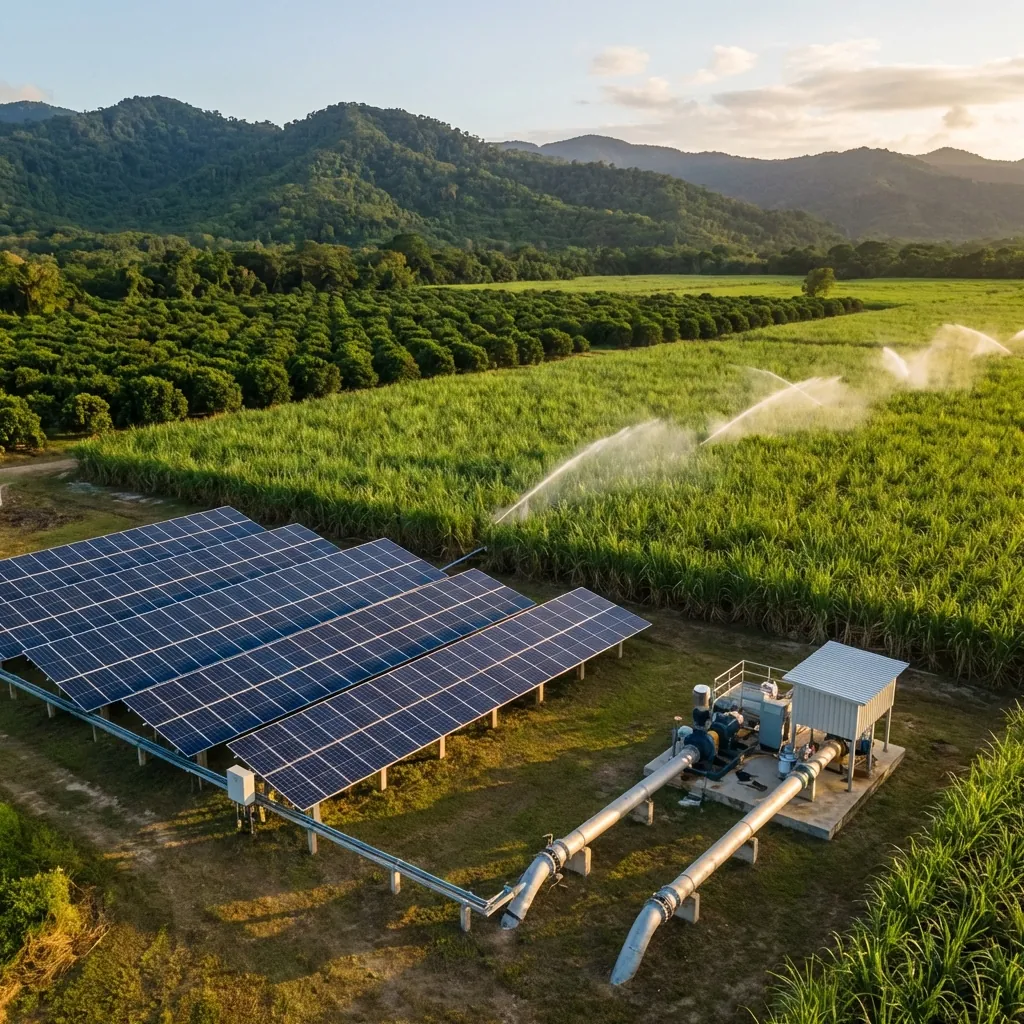
Farms and Agro‑Processing
Keep cold rooms, pumps and processing lines running through outages, on solar stored at midday.
- Cold rooms
- Irrigation
- Processing lines
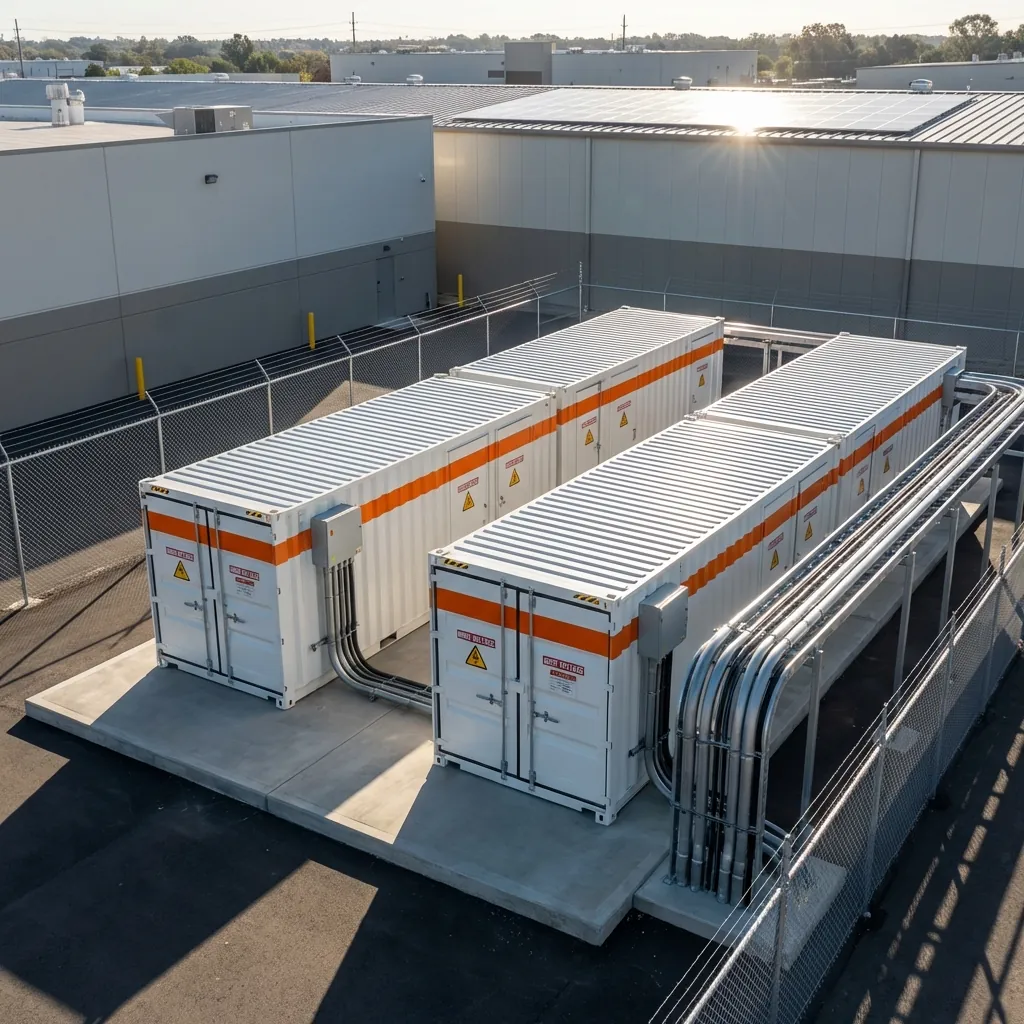
Commercial and Industrial
Cut demand charges on BEL’s industrial tariffs, and add the storage the PUC now asks for with new solar.
- Demand peaks
- Motors
- New solar
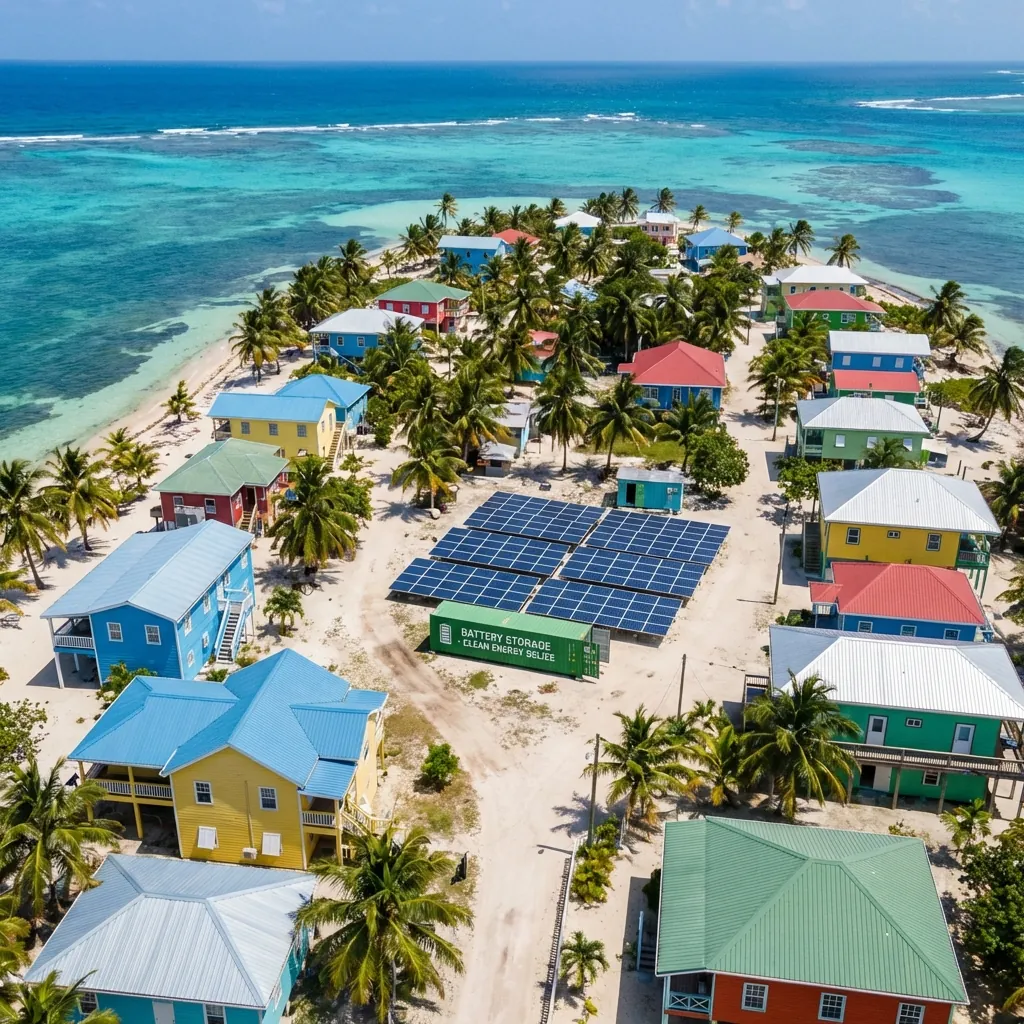
Cayes and Off-Grid Sites
Fewer diesel deliveries by boat: stored solar carries the evening, and the generator runs less.
- Diesel gensets
- Water makers
- Evening loads
Built for islands. Where power costs the most.
High tariffs, capped exports and hurricane outages make storage pay back faster on the islands. The ESS-L20 ships as one 20 ft block, for 50 or 60 Hz sites.
Island tariffs in St Lucia, Grenada and Dominica. Shift midday solar into the evening.
Source: CCREEE Energy Report Cards 2022–23, commercial rates including fuel charges
Take up to 160 kVA off demand charges like BL&P’s (US$13.21 per kVA).
Source: BL&P Secondary Voltage Tariff, 16 Sep 2022, company-owned transformer, plus VAT
Hurricane Melissa left over 70% of Jamaica’s JPS customers without power; 33,000 were still out three months on. Solar recharges the block every day.
Source: Jamaica Observer, 29 Oct 2025; The Gleaner, 27 Jan 2026
Net billing in Jamaica and grid-tied solar on New Providence both stop at 100 kW. Store midday solar on site instead.
Source: OUR net billing notice, 2025; BPL interconnection requirements for SSRG systems
Guyana also exempts deep-cycle batteries and inverters from duty and VAT. We confirm the tariff line for each market.
Source: Bahamas Customs, Frequently Imported 2024; Guyana Revenue Authority, 2026
Island utilities are adding storage alongside 300 MW of renewables. The ESS-L20 brings the same to commercial sites.
Source: Jamaica Information Service, 6 May 2026
Straight answers.
Is a second-life battery safe?
Every pack is scanned and graded before it goes in, and only the top grade is used. The packs stay in Nissan’s crash-tested enclosures. Each stack has its own gas, smoke and heat detection and fire suppression, the roof has deflagration vents, and the Titanium EMS platform watches every pack remotely. The ESS-L20 is designed to NFPA 855, 68 and 69 and IEC 62933-5-2, and UL 9540A testing is in process.
How long does an ESS-L20 last?
It is designed for ten years of daily cycling. At one full cycle a day, with the fade we measure in the field (about 3 health points a year), a block still delivers about 303 kWh a day in year ten: enough for the PUC’s one-hour rule on a 250 kW solar system. The enclosure, cooling and controls outlast the packs, so graded spare packs swap in to restore capacity and the block keeps working past year ten. Fewer cycles a day means slower fade.
What does the pack promise cover?
If a pack’s cells drift out of balance, we replace the pack. If a pack fades faster than expected, within the limits set in your agreement and under remote monitoring, we replace it too.
Do I need to buy anything else?
No. Titanium supplies the inverter (PCS) and the solar, installs and commissions the whole system, and keeps it running.
How is it monitored?
On the Titanium EMS platform. We watch every pack’s health remotely and plan top-ups with graded spares before you notice a drop.
What happens at the end of a pack’s life?
We take it back. A weaker pack is swapped for a graded spare while the block keeps running, and the old pack goes to recycling, where its materials go back into new cells.
Does it meet the PUC’s storage rule?
Yes. Since May 2026, distributed generation above 6 kW and up to 250 kW must include at least one hour of storage, and above 250 kW up to 1 MW at least two hours. One stack (136 kWh usable) covers a solar system of about 130 kW, and two stacks cover 250 kW. Above 250 kW, 500 kW needs two full blocks and 1 MW four.
How do I order one?
Every ESS-L20 is built to order, from one to four stacks of six packs. Book a site assessment: we review your bills and generator use, size the stacks, inverter and solar, and quote the complete system.
Titanium ESS-L20-638
DC power and energy
| Configuration | Up to 24 × 96S2P (six per stack), direct parallel; series option in pairs |
|---|---|
| Voltage range | 288 – 403 V; option 576 – 806 V 5 |
| Nominal voltage | 350 V; option 700 V |
| Rated / peak current | 114 / 229 A per stack; full block 457 / 914 A (option 229 / 457 A) |
| Nameplate energy | 235 kWh per stack; full block 941 kWh (new cells) |
| Rated energy | 160 kWh per stack; full block 638 kWh, at 68% SOH 1 |
| Usable energy | 136 kWh per stack; full block 543 kWh, 10 – 95% SOC 1 |
| Rated / peak power | 40 / 80 kW per stack; full block 160 / 320 kW 2 |
| Charging and discharging rate | ≤ 0.25P continuous, 0.5P peak |
| DC round-trip efficiency | ≈ 97%, excluding auxiliaries 3 |
Battery
| Pack | Nissan Leaf 40 kWh (ZE1), OEM enclosure, second life |
|---|---|
| Cell | NMC pouch, 56.3 Ah, 3.65 V nominal |
| Pack configuration | 96S2P, 192 cells, 350 V nominal |
| Packs per block | 6 to 24: one to four stacks, six levels each |
| Grade band | Band A: 76 – 79 Ah per cell group (68 – 71% SOH) |
| Pack protection | Pack contactors and precharge; fuse-switch per pack |
| Battery management | System BMS (3 controllers) reads every pack: SOH, cell-group voltages, temperatures; insulation monitoring |
¹ Start of second life, 25 °C, 0.25C; rated at the Band A lower limit. Each block’s delivered rating follows its measured pack grades.
² Operating power set by the site PCS within these limits.
³ Design estimate; verified at factory acceptance test.
⁴ Power derates above +45 °C ambient.
⁵ Series option: 12 strings of two packs in series; energy and power unchanged.
Mechanical and environment
| Dimensions (L × W × H) | 6,058 × 2,438 × 2,591 mm (20 ft) |
|---|---|
| Weight | ≈ 13.8 t (30,428 lb) |
| Enclosure | Insulated steel, IP55, C4; not stackable |
| Access | Front double doors; ISO cargo doors |
| Operating ambient | –20 to +50 °C 4; ≤ 2,000 m |
| Humidity | 0 – 95% RH, non-condensing |
Thermal and safety
| Cooling | 2 × 7.5 kW DX, R32, N+1 |
|---|---|
| Battery temperature | 15 – 30 °C in operation |
| Detection | Smoke, heat, H2, CO per stack |
| Suppression | Aerosol generator per stack |
| Explosion control | Gas-alarm exhaust; roof vents |
Control and communication
| Site EMS | Modbus TCP |
|---|---|
| PCS interface | CAN or Modbus TCP |
| Auxiliary supply | 400/230 or 480/277 V, 3-phase |
| Hard-wired I/O | Fire, E-stop, door contacts |
Standards and certification
- NFPA 855 · 68 · 69Design basis
- IEC 62933-5-2Design basis
- UL 1974Pack grading aligned
- UL 9540 · 9540ANot yet listed · testing in process
Preliminary specifications: design values, confirmed at order. Renders are for illustration; the final product may differ.
Book a site assessment.
- We review your bills and generator use.
- We size the block, inverter and solar.
- We quote the complete system and what it saves.