
We Understand Your World.
Running an island resort isn't just hospitality.
It's operating a small city.
You are hundreds of miles from the nearest spare part, technician, or backup plan. When you're that isolated, "reliability" isn't a buzzword—it's the only thing standing between a guest's paradise and a logistical nightmare.
"This page isn't a sales pitch. It's an acknowledgment. We've worked with enough island properties to understand the daily grind of keeping paradise running."
The Energy Reality
HVAC consumes 50-70% of your power. A single mid-day failure doesn't just lose comfort—it ruins food inventory and TripAdvisor ratings.
The Labor Reality
Finding qualified electricians on-island is nearly impossible. Your maintenance chief is already doing the job of three people.
The Logistics Reality
When a generator breaks, you're not calling a truck. You're coordinating boat charters, customs clearance, and weather windows.
The Anxiety of
Island Power.
If you run a resort, you know the feeling. It's Thursday. The fuel barge is due. The marine forecast predicts 8ft swells. You have 36 hours of diesel left in the tank.
That is not luxury. That is liability.
Beyond the noise and fumes, the "Old Way" carries hidden frictions that grind down your operation: fuel theft ("shrinkage"), voltage dips that fry expensive kitchen equipment, and the constant logistical headache of keeping the lights on.
The "Silent Thief"
Industry data shows remote sites experience 3-7% fuel "shrinkage" (theft or spillage). On a $30k/month fuel bill, that's $25,000/year vanishing into thin air.
Voltage Dips
A compressor kicks in, the lights flicker, and the refined atmosphere breaks. Inverters provide "Computer Grade" power quality, 100% of the time.
Weather Roulette
Bad weather doesn't just delay guests—it delays fuel. A single tropical storm can strand your supply barge for a week, turning your fuel reserve into an existential countdown.
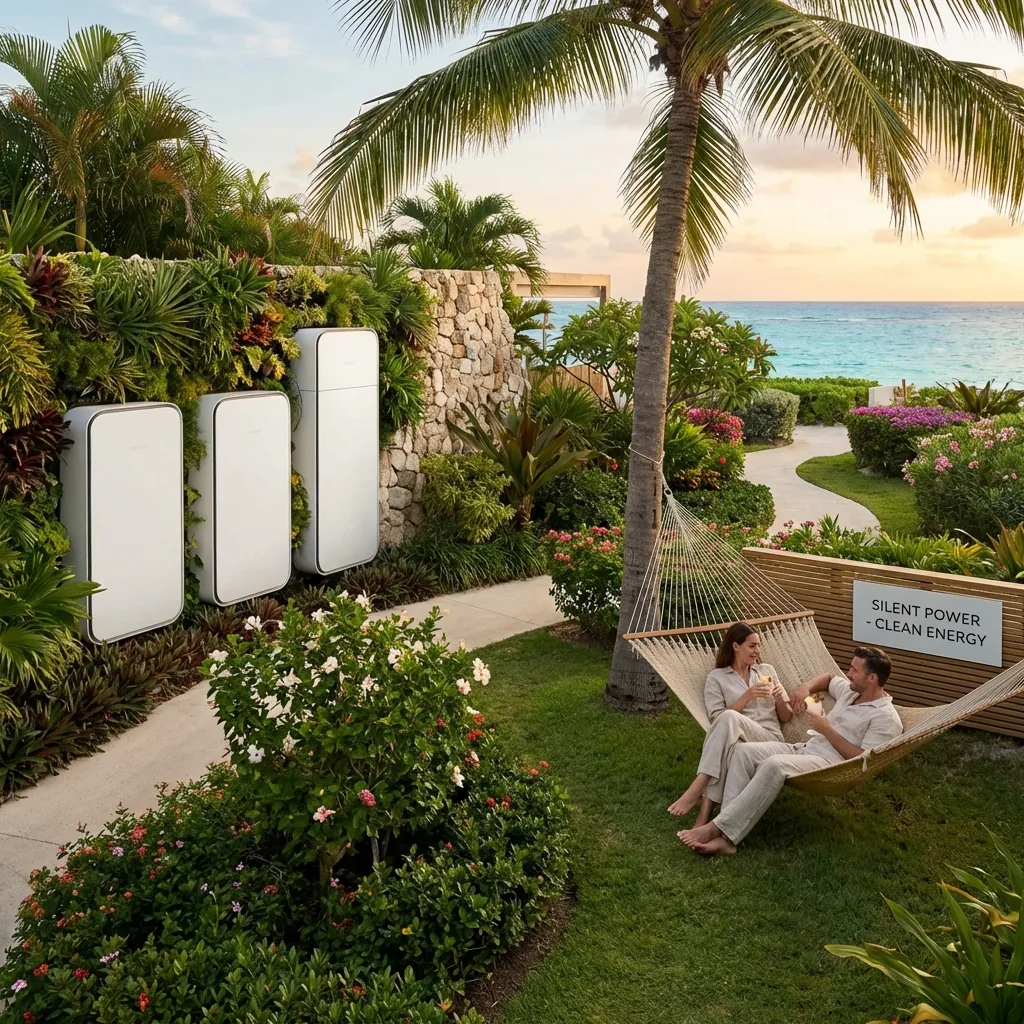
"Your guests didn't fly 4,000 miles to hear a 1500rpm engine running all night. They came for the sound of the ocean."
The Hidden Costs They Never Tell You
Your diesel invoice is only the beginning. Here's what's really eating your bottom line.
Barge Delivery
That $4/gallon diesel becomes $5.50 by the time it reaches your tanks. Charter fees, handling, pump time, and the "island premium" add 25-40% to every gallon.
Wet Stacking
Running generators at low load (common at night) causes unburned fuel to accumulate in the exhaust system. This "wet stacking" damages engines and shortens their lifespan by years.
Fuel Contamination
Water, sludge, and asphaltenes accumulate in stored diesel. Contaminated fuel clogs filters, damages injectors, and causes unexpected shutdowns—often at the worst possible moment.
7-Year CapEx Cycle
Industrial generators have a typical lifespan of 15,000-30,000 hours. At resort duty cycles, that's replacement every 5-8 years—a $50,000-$150,000 capital expense that repeats forever.
Labor Scarcity
Finding qualified diesel mechanics on remote islands is nearly impossible. When you do, they cost 30% more than mainland rates—and still can't arrive during bad weather.
Salt Air Corrosion
Marine environments accelerate corrosion on generator components. Radiators, electrical connections, and enclosures degrade faster than mainland installations, requiring more frequent replacement.
What Your Guests Actually Experience
You've spent millions creating the perfect ambiance. The hand-carved furniture. The locally-sourced menu. The sunset cocktail service. And then, in the background: the constant drone of a diesel generator.
A typical 50kW generator produces approximately 85 decibels—equivalent to standing next to a busy highway. Larger units push past 100dB. That sound carries, especially across water, especially at night when your guests are trying to sleep.
We've seen the TripAdvisor reviews. "Beautiful resort, but the generator noise was unbearable." One review can cost you dozens of bookings. And in the age of social media, a single viral complaint about your noisy infrastructure can undo years of brand building.
Guests at solar-powered resorts consistently rate "peacefulness" higher in their reviews. Silence isn't a feature—it's the foundation of the luxury experience you're selling.
The Sound of Luxury
Comparable to: Heavy traffic, loud restaurant
Comparable to: Library, quiet bedroom
The sound your guests came for
For Your Chief Engineer
The person who actually keeps the lights on.
We know you're the one who gets the 2am phone call when the generator trips. You're the one who has to explain to the GM why you need to charter a boat for a mechanic. You know—better than anyone—that the fuel gauge is lying.
We built this system to give you your life back.
"I finally sleep through the night."
- Every Engineer we've worked with
Value for Every Decision Maker
A renewable transition isn't just an engineering project—it's a financial restructuring that benefits every level of the organization.
The Investor
Focus: Valuation
Reduce your largest variable cost (energy) to increase Net Operating Income (NOI). Every $1 of OpEx savings can add $10-12 to asset value.
The CFO
Focus: Hedging
Lock in energy costs for 25 years. Eliminate diesel price volatility and benefit from 100% tax depreciation under Belize Fiscal Incentives.
The GM
Focus: Experience
"Silent Luxury." Improve guest satisfaction scores by silencing generators. Automated systems mean less maintenance downtime.
Chief Engineer
Focus: Reliability
Remote monitoring 24/7 means we catch issues before you do. No oil changes, no fuel filter clogs, no barge logistics.
The Green Globe Advantage
Today's luxury travelers aren't just looking for beautiful properties—they're looking for responsible ones. Green Globe and EarthCheck certifications have become powerful differentiators in the high-end hospitality market.
These certifications specifically evaluate your energy infrastructure. Solar and battery systems don't just help you qualify—they demonstrate measurable, verifiable environmental commitment that resonates with eco-conscious travelers willing to pay premium rates.
Eco-certified properties command 10-20% higher Average Daily Rates from sustainability-focused travelers.
Many corporate travel programs now mandate certified-sustainable accommodations. Open new booking channels.
For investor-owned properties, documented carbon reduction supports ESG metrics and attracts impact investors.
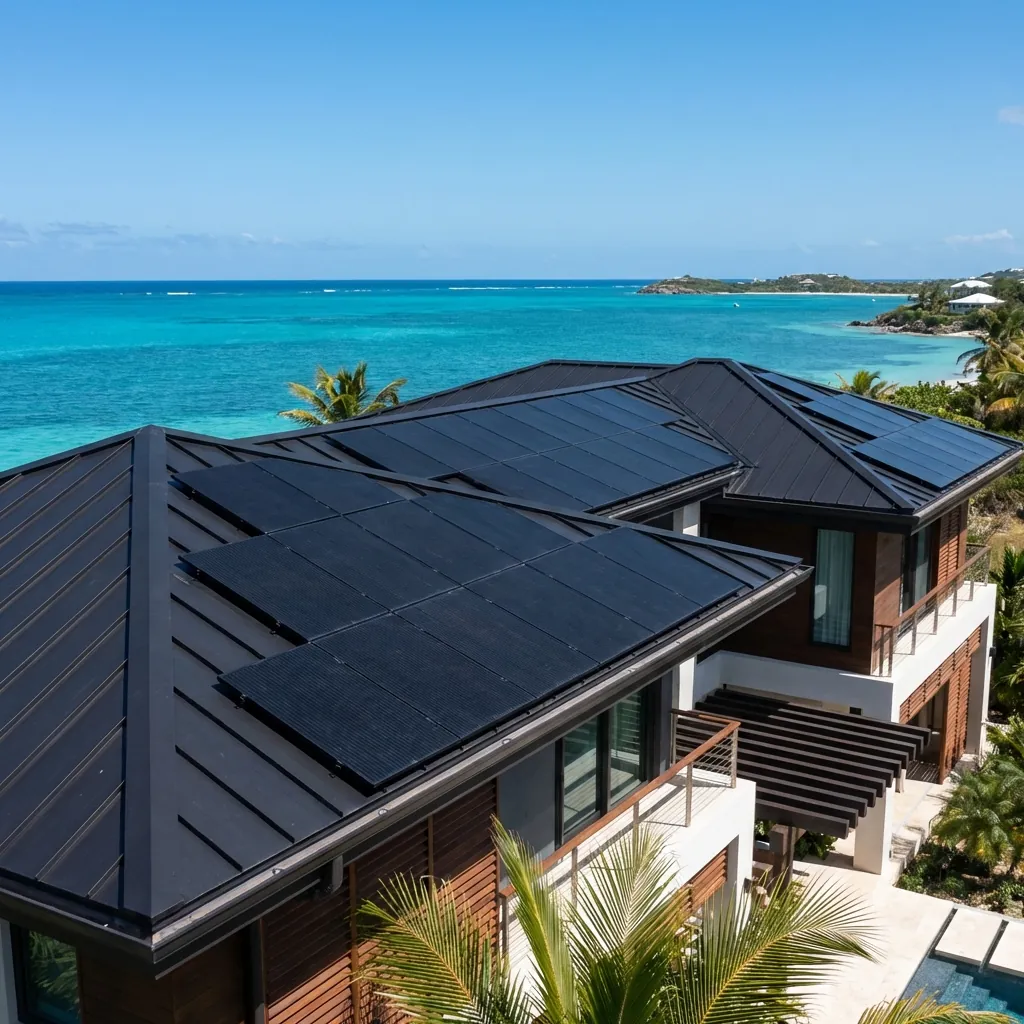
"PV or Solar technologies (if available) form part of the energy supply."
The Diesel Tax
is Real.
When you factor in barge delivery, storage, maintenance, and replacement cycles, your "true cost" of power is likely over $0.50/kWh. Solar + Storage can deliver a Levelized Cost of Energy (LCOE) under $0.10/kWh locking in savings for decades.
Cost Comparison (25 Years)
Subject to infinite oil price inflation
Asset owned. Cost fixed.
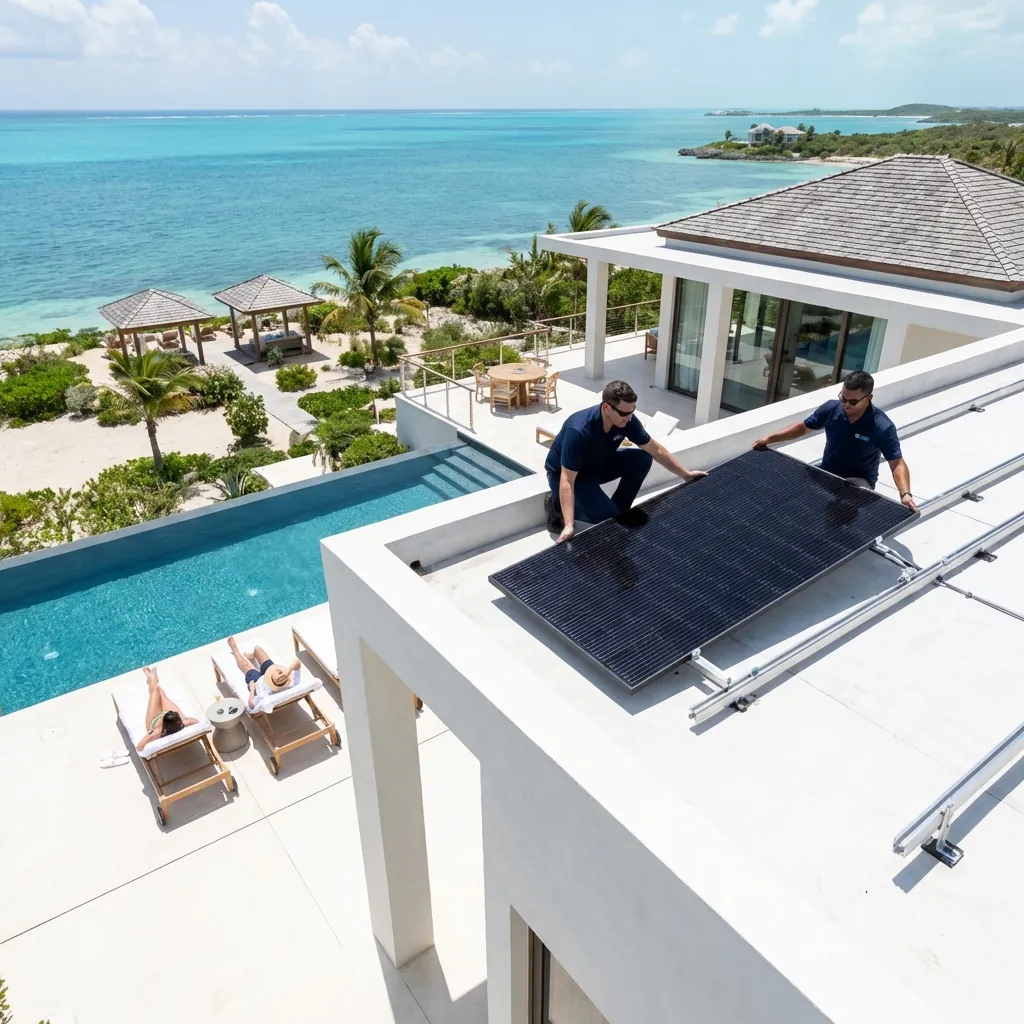
Built Without Interrupting Paradise
Our installation teams are trained to work in "invisible mode." We coordinate with your GM to ensure drilling and heavy lifting happen during turnover windows. The result is a seamless transition to renewables.
The Engineering Behind It
Curious about the decentralized logic that makes this possible? See how our "Ring Topology" guarantees N-1 redundancy.
View Technical Deep DiveRapid Deployment
We use pre-assembled containerized systems to minimize construction time and noise on your property. Your guests will never know we were there.
Invisible Aesthetics
Full black panels, hidden conduit, and integrated design. We treat your roof like a facade, not a utility rack. Your guests will never know it's there.
Concierge Support
Direct access to your project engineer. No call centers. No hold music. When you call, you get someone who knows your system by name.
We Stay With You
Our relationship doesn't end at commissioning. We monitor, maintain, and optimize your system for its entire 25+ year lifespan. Your success is our success.
The Blackout That Wasn't
"When the subsea cable failed during peak season one evening, the entire island went dark. Except us. Our guests didn't even know there was an outage until they saw the darkness across the bay."
Navigating Belize's Energy Landscape
Developing solar projects in Belize requires more than technical expertise — it requires understanding the regulatory pathway and maintaining strong relationships with key government agencies.
PUC Licensed
Titanium Energy is fully licensed by the Public Utilities Commission. Our engineers are PUC-approved, ensuring every project meets Belize's grid interconnection and safety requirements.
PUC Collaboration
We work directly with the PUC throughout the development process — from initial feasibility studies through final interconnection approval. This relationship helps projects move efficiently through the regulatory pipeline.
BTB Partnership
For resort and tourism sector projects, we coordinate closely with the Belize Tourism Board to align installations with tourism development priorities and national sustainability initiatives.
Cross-Agency Coordination
We maintain working relationships with the Ministry of Energy, Department of Environment, Lands Department, and municipal authorities to streamline permitting and approvals across all project types.
"For foreign investors and developers, navigating Belize's regulatory environment can be the biggest project risk. Our established relationships turn that risk into a managed process."