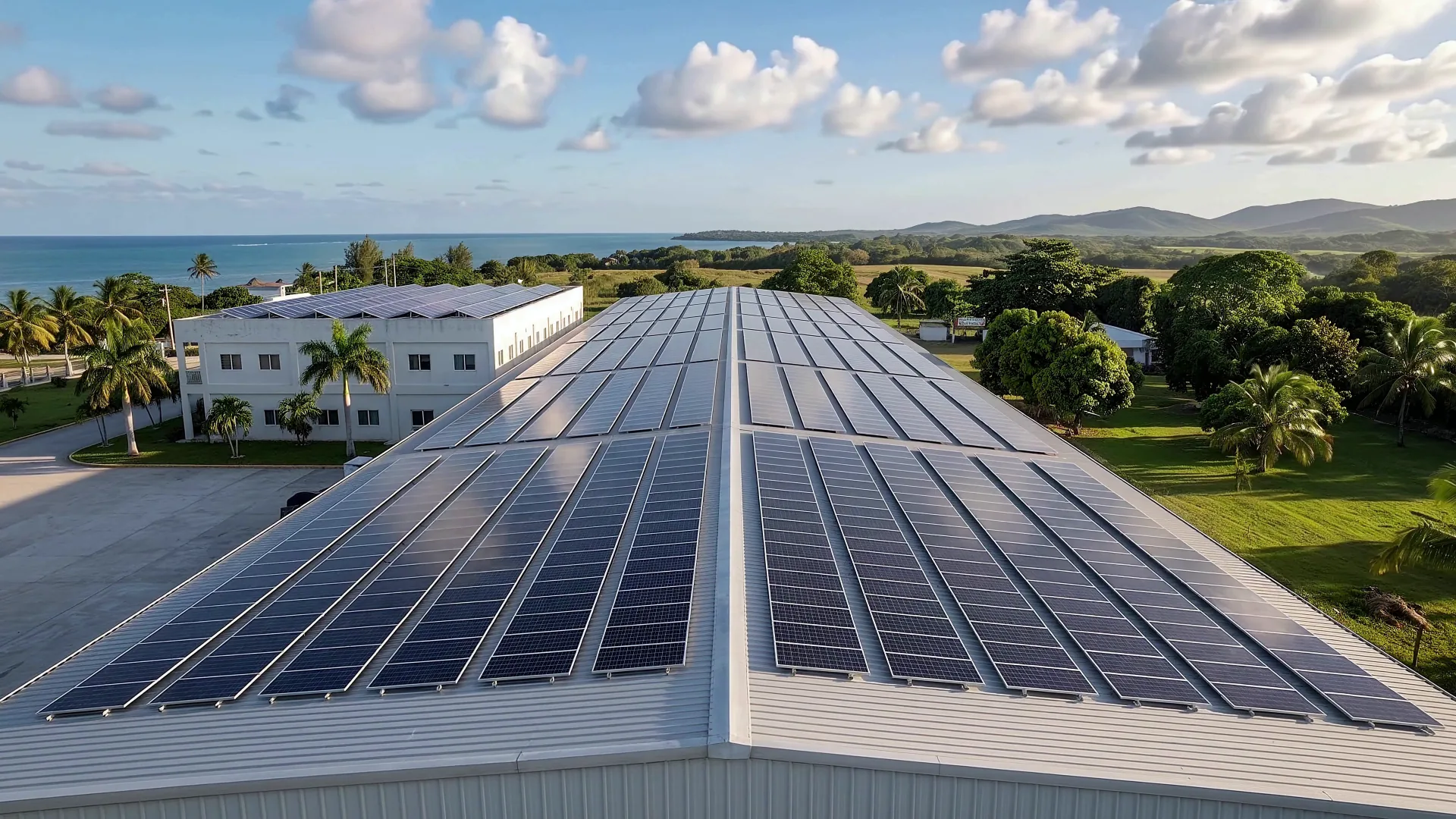
Rooftop Solar.
Engineered for Every Roof.
Visualization
Put your roof to work.
Sized to how you use power, a rooftop system with its battery can cut a business’s power bill by 45% or more at today’s commercial rates.
- 45%+bill reduction
- For a business that uses most of its power by day. More with a larger battery
- 9–12cents a kWh
- Your panels and battery, bought outright: the price spread over 20 years of their power, in Belize cents
- 13,000kWh a year
- From every 1,000 ft² of metal roof
Sources. Roof capacity: Panel data sheets (Jinko Tiger Neo, Trina Vertex N): about 21 W per ft² of panel. Panels on about half a metal roof and 38% of a flat roof, after setbacks and walkways: NREL/TP-6A20-65298 (2016) finds 49 to 66% of medium and large roofs suit panels; walkways as in IFC 1205 fire-code pathways. Yield: PVGIS 5.2 (European Commission JRC), seven Belize towns, 16% losses: 1,264 to 1,446 kWh per kW a year on a roof. A Central Bank of Belize study (Working Paper 22/002) implies about 1,312. Solar + storage cost: Commercial rooftop solar with 1 hour of storage per kW, the price spread over 20 years of its power; yield from PVGIS 5.2 (European Commission JRC); before interest, upkeep, a battery replacement and GST. Share of the bill: PVGIS 5.2 hourly solar data for Belize City; PUC Belize, BEL Schedule 6A, Commercial 1 and 2, with the BZ$0.13 export credit; typical hourly use by business type. Up to 45% with the battery the PUC requires, more with a larger battery and more panels. Accounts with a kVA charge save less.
See what your roof can make.
Pick the roof type, then set its length and width. The figures below change as you go.
- 100kW
- Solar the roof can hold.
- 130,000kWh
- Power generated a year.
- BZ$56,000–64,000
- Savings a year.
An illustration, not a quote: every roof gets its own layout and numbers. Solar at about 10 W per ft² of metal roof, panels flush on the sheet, and 8 on a flat roof, in tilted rows spaced so they don’t shade each other. Power generated at Belize’s yield of about 1,300 kWh per kW a year on a metal roof and 1,350 on a flat roof. Savings at BEL’s commercial rate of BZ$0.43–0.49 per kWh, for power used on site; power sent back to the grid earns about BZ$0.13 per kWh. Grid rate:PUC Belize, BEL Schedule 6A, Commercial 2: BZ$0.41, 0.44 and 0.47 per kWh by block (July 2026 to June 2027) plus the BZ$0.0151 cost-of-power adjustment (November 2026), before the BZ$150 monthly charge. Power sent back: PUC Belize, BEL Full Tariff Review 2024 to 2028, Final Decision (October 2024), Schedule 6B feed-in tariff.
Visualization
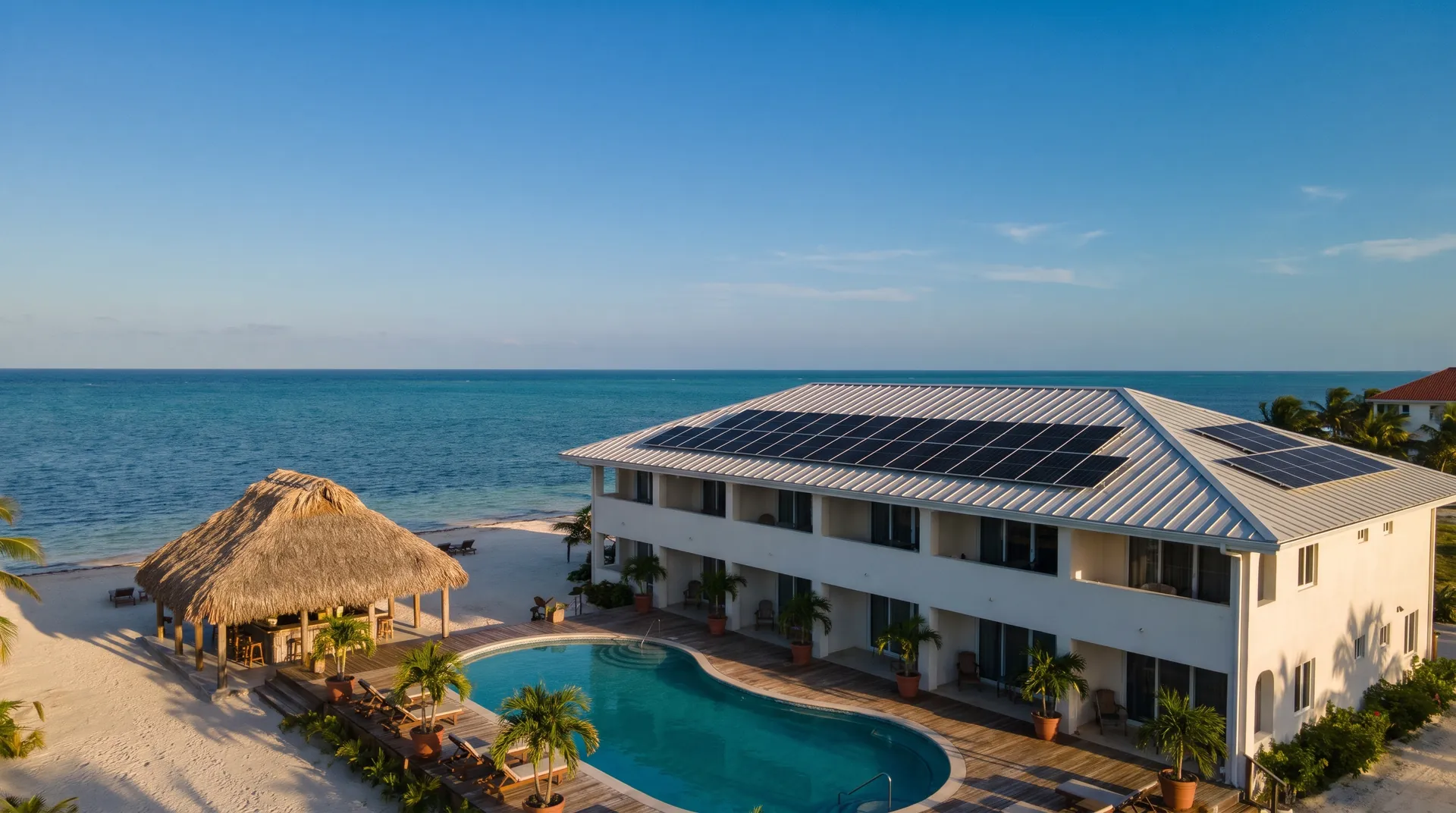
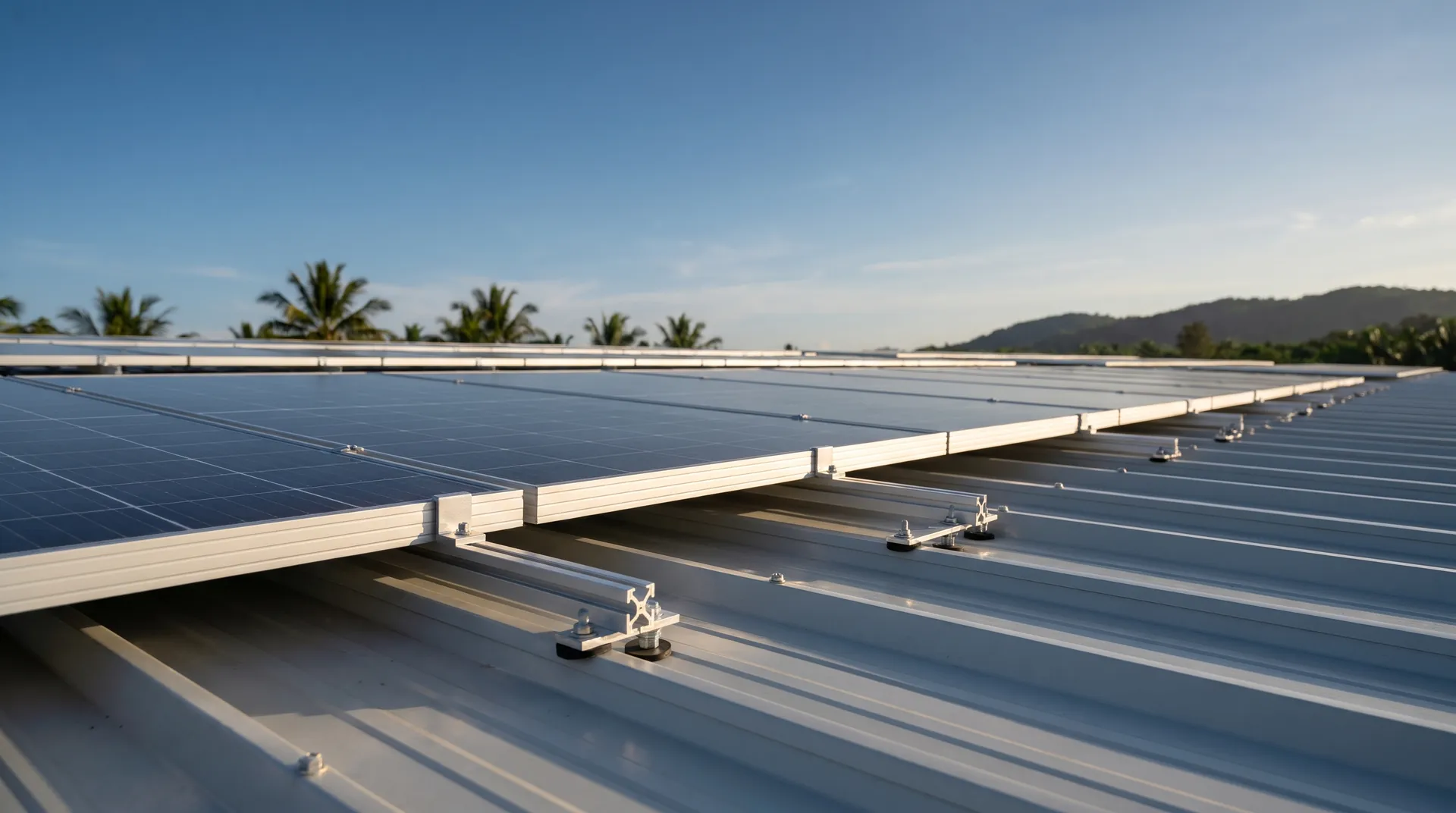
We fit the mount to your roof.
Four in five homes in Belize sit under metal sheet, and most commercial roofs anywhere are metal or concrete. Each takes its own attachment: pick yours to see how we do it.
- 1Module
- 2Clamps, each panel held on its own
- 3Aluminium rail
- 4Crown bracket and screw
- 5EPDM seal
- 6R-panel or corrugated sheet
- 7Steel purlin
R-panel and zinc sheet
The most common roof in Belize. Brackets sit on the high rib, away from the water in the valleys, and screw through into the purlin under an EPDM seal.
Zinc, galvalume and corrugated sheet on homes, resorts, farm sheds and factories
- Penetrations
- Yes: sealed, and only into structure
- Attachment
- Crown brackets or short rails, screwed into the purlins with EPDM-sealed fasteners
- We check
- Purlin positions, size and condition; sheet thickness and rust; the existing fixings
- Watch for
- A screw that misses the purlin, or a washer tightened too far or not enough: that is how leaks start
Sources: mounting makers’ installation guides (S-5!, Esdec, K2 Systems, IronRidge, Unirac, Renusol); NREL, Typhoon Mawar damage assessment (2024); Statistical Institute of Belize and UNICEF, Multiple Indicator Cluster Survey 2015–16: 80% of households under metal or zinc, 12% concrete, 6% thatch.
Visualization
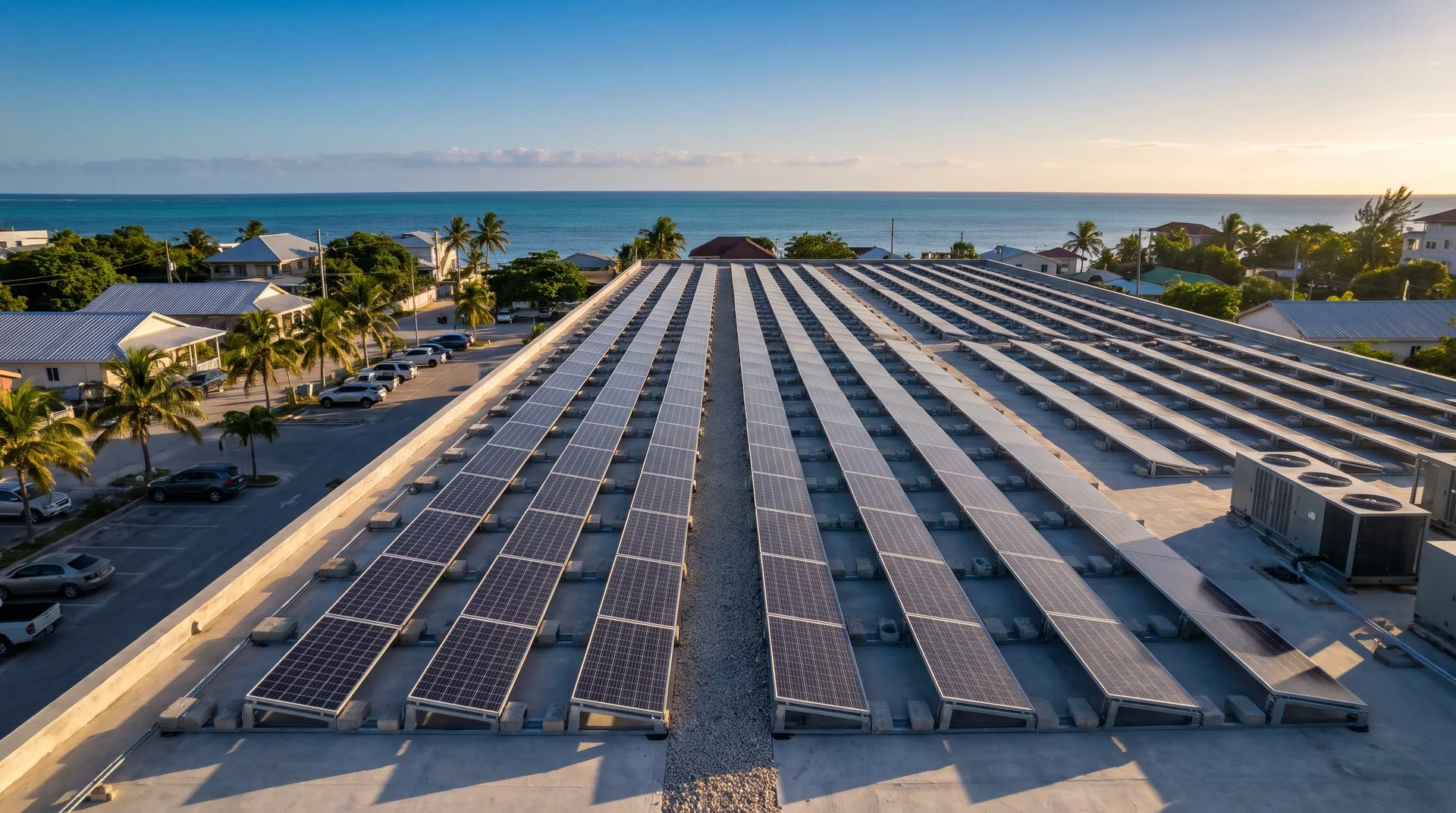
We lay out every roof for hurricane wind.
Wind pulls hardest at a roof’s edges and corners, and the clamps decide what stays on. So the layout comes first: corners clear, edges set back, attachments closer where the pull is strongest.
- Corner zone: highest uplift
- Edge zone
- Field
Corners and edges pull hardest.
Wind lifts a roof hardest at its corners and edges. The array stays out of the corner zones, sits back from the edges, and its attachments are spaced closer where the pull is strongest. The 2016 edition of the US wind standard raised these roof pressures by up to 100% in places.
ASCE 7-16 roof zones (Florida Building Commission, ASCE 7-16 fact sheet). Zone widths drawn for illustration.
Every panel, clamped on its own
Poor clamping was the most common failure NREL found after a Category 4 typhoon. Each of our panels has its own clamps, through-bolted where possible, with hardware that cannot work loose.
Every bolt, torque-checked
Set with a calibrated torque wrench and recorded at install, then checked again every year, as NREL recommends for hurricane regions.
Source: NREL, Solar PV damage assessment after Typhoon Mawar: findings and recommendations (NREL/TP-5R00-89629, November 2024).
We keep air under every panel.
Panels lose output as they heat up. On the same sunny day, a panel laid tight to the roof runs 16 °C hotter at noon than one with air behind it.
- Panel laid tight to the roof
- 69 °C at noon
- Panel with open air behind it
- 53 °C at noon
- Air
- 32 °C at noon
Made for salt air
Within about a kilometre of the sea, steel loses 2 to 4 µm of zinc a year. Our rails are aluminium, the fasteners stainless, with isolation pads where they meet zinc sheet.
Watertight by method
Seam clamps and ballast need no holes at all. Everywhere else, every screw lands on a purlin or rafter and is sealed.
Source: American Galvanizers Association, HDG corrosion rates for ISO 9223 categories (C4: 2.1–4.2 µm a year).
Visualization
We add the battery, and tie in your generator.
The roof makes the power by day. A battery carries it into the evening and through outages, and the generator runs only when both are spent. One controller runs them all, and our team watches it remotely.
- 11outages
- For the average BEL customer in 2025, 15.8 hours in all. A battery carries the building through them.
- 1hour
- Minimum storage with grid-connected solar from 6 to 250 kW in Belize
- 2hours
- Minimum storage from 250 kW to 1 MW
- 3.5days
- Backup at an NREL study site once solar and a battery joined its 300 kW diesel, up from 1.7
Sources: Belize Electricity Limited, 2025 Business Report: 11.45 outages and 15.82 hours per customer (SAIFI, SAIDI); PUC Belize, Electricity Licensing and Consent (Capacity Limits) Order 2026; NREL, Resilient renewable energy microgrids (NREL/PR-7A40-70033, 2017).
Rooftop system specs
What goes on your roof, and how it is held there.
- Roofs
- Standing seam, R-panel and zinc sheet, concrete, membrane, tile and shingle
- Attachment
- Seam clamps; crown brackets into the purlins; ballast or anchors on flat roofs; hooks and flashed feet on tile and shingle
- Rails and clamps
- Aluminium rails; every panel clamped on its own, through-bolted where possible
Show 7 moreShow less
- Fasteners
- Stainless steel with EPDM seals; isolation pads where aluminium meets zinc sheet
- Wind design
- To the site’s design wind speed, with ASCE 7-16 roof corner and edge zones
- Clearances
- Setbacks from edges and ridges; walkways for service and fire access
- Airflow
- Panels held off the roof on rails, so air cools them from below
- Coastal spec
- Hardware chosen for ISO 9223 class C4, within about a kilometre of the sea
- Electrical
- Protection to code; module-level rapid shutdown on request
- Panel ageing
- At least 87.4% of rated power after 30 years, from the panel makers’ data sheets
What you get.
One contract from the survey to the yearly check, and one team to call after.
- Warranty
- Ten years on our workmanship, every roof penetration included. Panels carry their makers’ product and output warranties, usually 25 years.
- Design life
- Built to last as long as the panels: 25 years and more. Racking makers warrant their systems for 20 to 25 years.
- Monitoring
- Our team watches every system around the clock, with a 15-minute response target when an alert comes in.
Show 4 moreShow less
- Who to call
- Our own team in Belize, on one number: +501 630 1196.
- Build time
- On the roof, a home system takes a day or two and a large one a few days. With permits and the grid connection, a project typically runs two to three months; bigger commercial roofs take longer, and the schedule comes with the design.
- Financing
- Pay outright, or finance: green energy loans can cover the whole project, and the DFC lends at 6% over up to 22 years.
- Maintenance
- Planned visits, cleaning, and a torque check on every roof each year.
Sources: build time, EnergySage, How long does it take to install solar panels? (updated 5 December 2024): 60 to 90 days on average, one to three days on the roof. Racking warranties: IronRidge (25 years), Esdec (20 years). Financing: Development Finance Corporation Belize, Sustainable Energy Loans, 6% on the reducing balance, up to BZ$300,000, up to 22 years.
We run the whole project, from survey to switch-on.
We engineer, supply and build the whole system, then look after it for its life.
- 01
Survey
- Roof condition and age
- Structure and drainage
- Your bills or load list
- 02
Structure
- Dead load and uplift checks
- Included in our turnkey scope
- 03
Design
- Wind, fire and access layout
- Attachment and racking for the roof
- Electrical design and protection
- 04
Permits
- PUC and BEL applications
- Grid connection
- 05
Build
- Installed, torque-checked, photographed
- Battery and generator tied in
- 06
Run
- Remote monitoring
- Maintenance
- A torque check every year
Questions owners ask
Will solar make my roof leak?
Not when every fixing lands on structure and is sealed, or when the mount needs no holes at all: clamps on standing seam, ballast on concrete. On membrane roofs the roofing maker approves the method first. Every roof penetration carries our 10-year workmanship warranty.
Can my roof carry the weight?
Most can. A flush-mounted array adds about 15 kg per square metre. Ballasted frames on flat roofs add more, most at the edges and corners. We check the structure before anything is designed.
Will it survive a hurricane?
Design decides. The rooftop arrays that come through typhoons and hurricanes are the ones clamped and bolted properly, not the ones that saw less wind. We keep the corners clear, clamp every panel on its own and torque-check every bolt.
What if the roof needs replacing?
Replace an ageing roof first. Metal and concrete roofs usually outlast the panels. Shingle and membrane roofs often do not, and lifting an array off and putting it back later is a second installation.
Do I need a battery?
In Belize, grid-connected solar above 6 kW must include storage: at least one hour up to 250 kW, and two hours from 250 kW to 1 MW. Off-grid sites have it anyway. We size the battery for what the site needs, not only for the rule.
Roof or ground?
Roof first when it is sound and big enough: the structure is already there and the power is used right below it. When the roof is small, shaded, thatched or near the end of its life, a ground mount or a carport does the job.
Navigating Belize’s Energy Landscape
Belize’s energy rules are changing fast. Our engineers are fully licensed, and our established partnerships keep each project in step with every change, so our clients’ projects are delivered with ease.
PUC Licensed
Titanium Energy’s engineers are fully licensed by the Public Utilities Commission. Every system we build meets Belize’s grid and safety requirements as they stand today.
PUC Collaboration
We work directly with the PUC from feasibility studies to final interconnection approval, so each new rule is part of our clients’ projects from the start.
BTB Partnership
For resort and tourism projects, we coordinate closely with the Belize Tourism Board to align each installation with tourism development and national sustainability priorities.
Cross-Agency Coordination
Our working relationships with the energy ministry, the environment and lands departments and municipal authorities keep permits moving as the rules change.
“For foreign investors and developers, navigating Belize’s regulatory environment can be the biggest project risk. Our established relationships turn that risk into a managed process.”
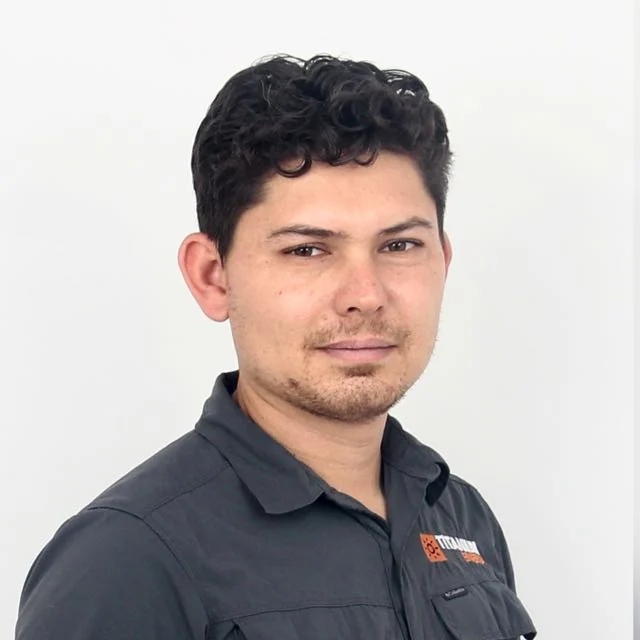 Jakob WoodruffCEO
Send us your roof.
Five things are enough for a first answer: whether your roof suits solar, what it could carry, and what to check next.
- 01Where the building is
- 02The roof type, and how old it is
- 03A photo of the roof, or a pin on a map
- 04Twelve months of power bills, or your monthly kWh
- 05Your generator and backup needs