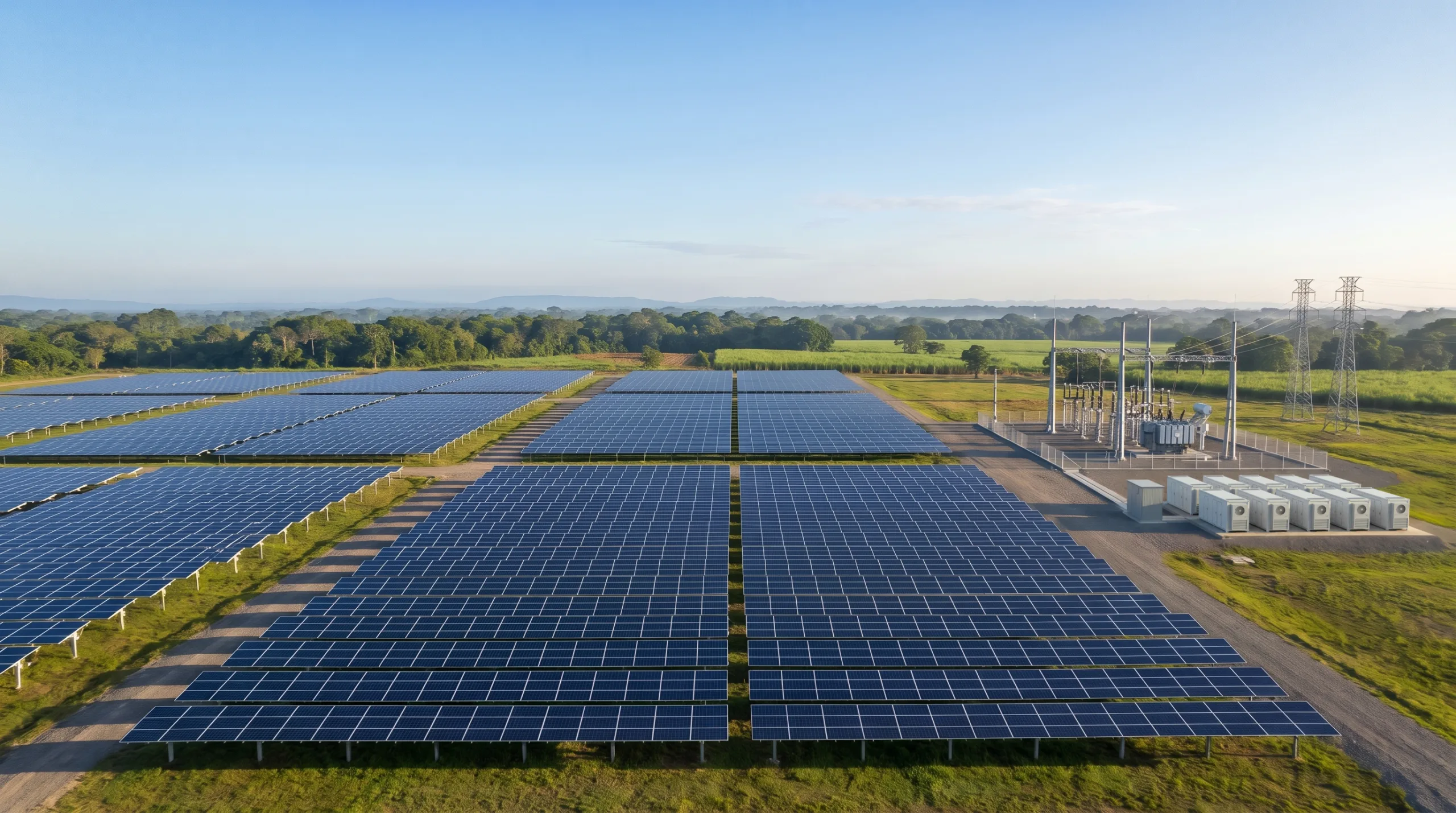
Utility-Scale Solar.
Engineered for Caribbean Grids.
Visualization
Utility-scale solar EPC, from first study to grid.
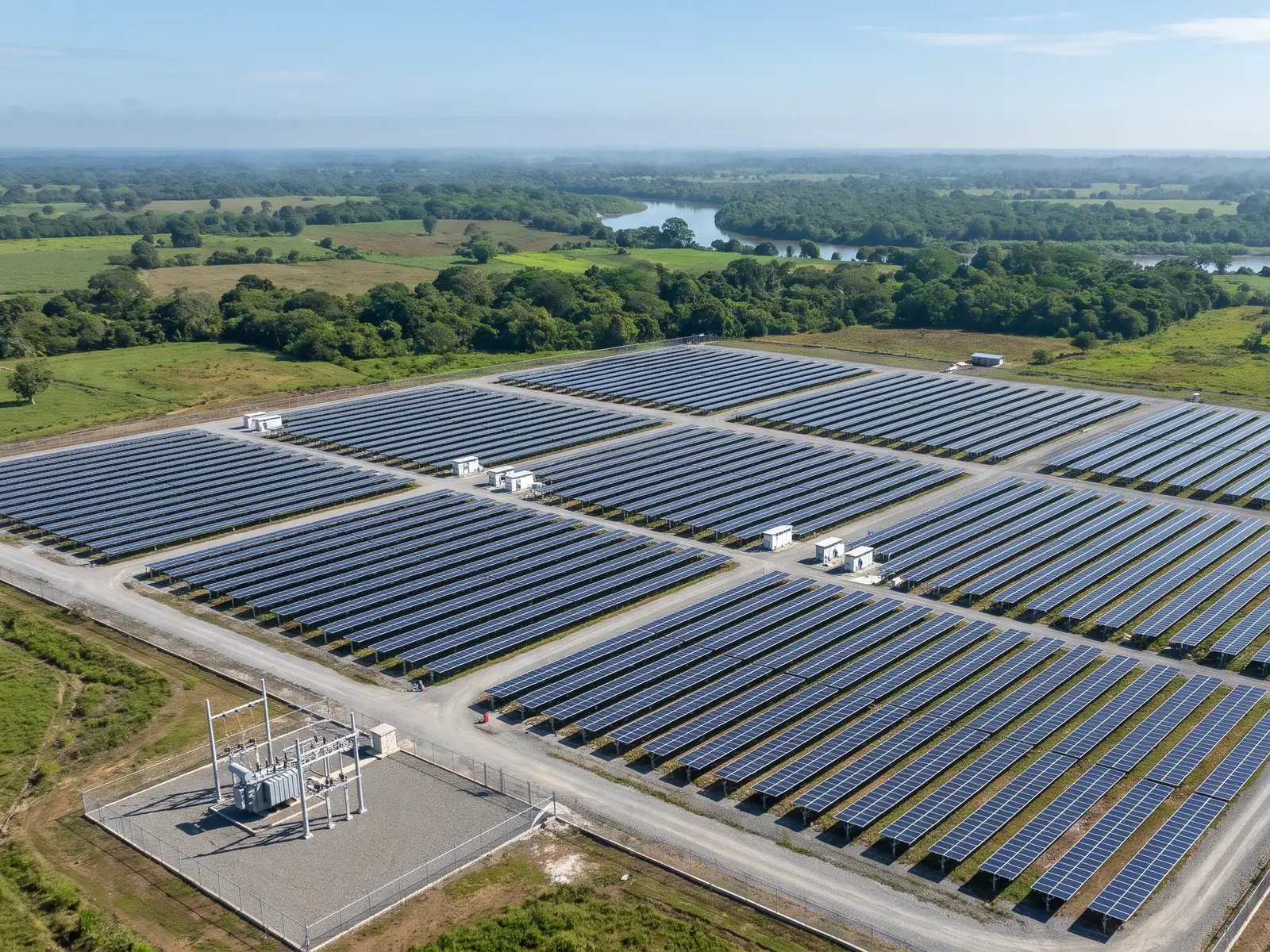
Most of a solar plant’s risk is settled before the first post goes in. In Belize and across the Caribbean, we carry a project from site screening and yield studies through grid studies, permits and lender review to construction, commissioning and decades of operation.
- 20+MW
- In active tenders as of November 2026, with four or more projects in development
- 8–24+months
- To build and commission a plant, from the start of construction. Recent Caribbean plants have been given 12 to 18 months or more
- 47%
- CARICOM’s target for renewable electricity by 2027, from 8% in 2012
One team, from the first study to the last decade.
Years of development, months of construction, decades of operation. Seven gates decide when a project moves on, and the same team carries it through every one.
- 1Site secured
- 2Grid study accepted
- 3Licence and permits granted
- 4Financial close
- 5Grid-code tests passed
- 6Commercial operation
- 7Final acceptance
Source and notesHide source and notes
- 01
Develop
- Site screening, land and concept layout
- P50/P90 energy yield report
- Grid studies with the utility
- Environmental and social assessment
- Licence, permits and environmental approval
- 02
Finance
- Power purchase agreement with the utility
- Lender and technical review
- Financial close
- 03
Build
- Detailed design, signed by licensed engineers
- Protection settings and plant controls
- Long-lead orders, shipping and customs
- Civil works, piling and structures
- Substation, cabling and storage
- 04
Commission
- Grid-code and performance tests
- Capacity test
- Acceptance and handover
- 05
Operate
- Monitoring to IEC 61724-1
- Maintenance and annual reporting
- Repowering and end-of-life plan
Caribbean grids are buying solar with storage.
Utilities, regulators and governments across the region are tendering utility-scale solar, and more of them now ask for batteries with it. A selection of current projects and tenders, each from the body that published it.
- Puerto RicoContracts before the Energy Bureau547 MW solar659 MW batteriesReviewed, March 2026
- Dominican RepublicRenewables awarded by CUED325.7 MW renewableswith 50% battery backupAwarded, June 2026
- JamaicaGeneration Procurement Entity tender300 MW renewables150 MW batteriesTender, May 2026
- BelizeUtility-scale solar tender, with IFCUp to 80 MW solarFive bidders prequalified, August 2026
- BarbadosMinistry of Energy and Business tender60 MW / 240 MWh batteriesTender, 2026
- GuyanaGUYSOL, eight solar farms33 MWp solarwith 30 MWh of storageFive of eight farms operating, January 2026
- Cayman IslandsRegulator’s solar and battery tender22.5 MW dispatchable solarBids under evaluation since 2025
- BahamasBaillou Hills, New Providence20 MW solarwith batteriesDue early 2027
Source and notesHide source and notes
Most sites fail on paper.
We screen sites out before money is spent on them: protected land, flood and wildfire risk, land title, archaeology and the route to a substation. When Belize screened land for its 80 MW tender with IFC, six of 26 sites made the shortlist.
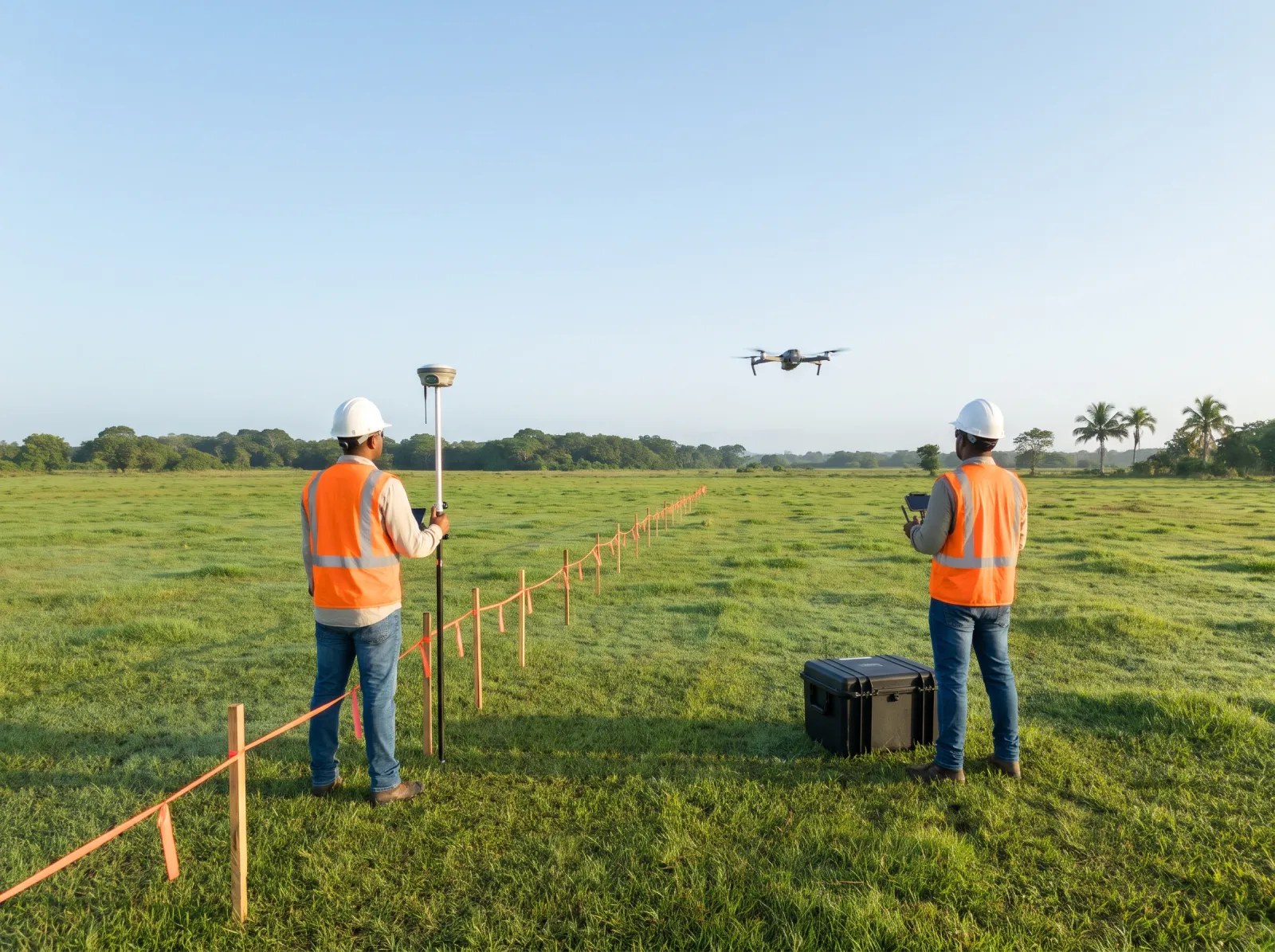
- 26
Sites reviewed on environmental, social, heritage and biodiversity criteria, with GIS, field visits and local input
- 6
Shortlisted, all in northern Belize, for final grid, survey and soil studies
- 4
Up to four selected to host the 80 MW of solar
Sale, licence and approval.
Every grid in the region buys power, licenses plants and approves sites its own way. The lenders bring one standard that applies everywhere.
- Power sale
- A power purchase agreement with the utility, often won in a tender. Jamaica’s Generation Procurement Entity, the Cayman Islands’ regulator and Belize’s utility, with IFC, have each run one since 2025.
- Licence
- Each grid has its own route. In Belize, a plant that sells to the utility is licensed by the PUC as an independent power producer and needs a separate consent to build.
- Environment
- An approval scaled to the plant. In Belize: a clearance under 10 MW, a limited study up to 30 MW, and a full impact assessment above 30 MW or 200 acres.
- Lenders
- IFC Performance Standards 1 to 8 and the Equator Principles: impact assessment, a management plan, community engagement and a grievance mechanism.
Source and notesHide source and notes
Belize Solar PV Project, up to 80 MW: project teaser, Government of Belize, BEL and IFC, January 2026. Screening by IFC and its environmental and technical consultants. Their process, shown as an example.
Jamaica Information Service (May 2026); Utility Regulation and Competition Office, Cayman Islands (July 2025); BEL RFQ (January 2026). Belize: Electricity Licensing and Consent Regulations, S.I. 47 of 2026; Environmental Impact Assessment Regulations, S.I. 97 of 2026. IFC Performance Standards (2012); Equator Principles (EP4, 2020).
Bankable numbers, not best guesses.
Investors most often require a P90 yield: the energy a plant should beat nine years in ten. It is built from decades of satellite data and a model of the plant, carried out or reviewed by an independent specialist.
Sun across the Caribbean.
From Nassau to Port of Spain, the sun averages 5.1 to 5.8 kWh/m² a day. Each site’s dullest year since 1984 came in 6 to 10% below its own average.
- Nassau, Bahamas5.2
- Grand Cayman5.5
- Northern Belize5.1
- Kingston, Jamaica5.5
- Santo Domingo5.5
- San Juan, Puerto Rico5.2
- Guadeloupe5.5
- Bridgetown, Barbados5.7
- Willemstad, Curaçao5.8
- Port of Spain, Trinidad5.2
From P50 to P90.
Add the uncertainty of the data and the model, 8 to 10% in all, and the P90 sits 1.28 standard deviations below the middle estimate. At 8%, that is about 90% of P50.
Source and notesHide source and notes
Designed for small grids.
On a small grid a solar plant has to behave like a power station: ride through faults, hold voltage, answer frequency changes and limit how fast its output moves when clouds pass. A plant controller and batteries do that work.
- Solar output
- To the grid, ramp-limited
- Battery fills or absorbs the gap
Plant output, % of capacity
What a utility plant needs.
Grid studies with the utility: power flow, short circuit and stability. A plant controller that holds voltage and ramp rate at the point of connection. SCADA on open protocols such as IEC 61850 and DNP3, secured to IEC 62443. Grid-code conformity shown by test and model, as IEEE 2800.2 sets out, and batteries to UL 9540 and NFPA 855.
How the region asks for it.
- Puerto Rico
- Output may change by no more than 10% of capacity a minute, frequency response must come within one second, and batteries are a named way to comply.
- Jamaica
- Solar and wind plants must hold voltage at the connection point and supply resource forecasts to the system operator.
- Barbados
- A 60 MW, 240 MWh battery tender, because “storage or curtailment is needed to avoid Public Grid stability issues”.
Show 2 moreShow less
- Cayman Islands
- The regulator’s 22.5 MW solar tender comes with batteries, so the power can be dispatched at peak.
- Belize
- The utility’s published connection rules cover 22 kV and below; in April 2026 the regulator said it expected transmission and distribution codes by the end of 2026.
Source and notesHide source and notes
Illustration: a passing-cloud morning in one-minute steps. The ramp limit, 10% of plant capacity a minute, is from Puerto Rico’s minimum technical requirements for solar plants.
FERC pro forma interconnection procedures, sections 6.2 and 7.3. Standards bodies’ own pages, read November 2026.
PREPA, Minimum Technical Requirements for PV (2024 RFP). Office of Utilities Regulation, Jamaica, Electricity Book of Codes (2016). Ministry of Energy and Business, Barbados, RFP (2026). Utility Regulation and Competition Office, Cayman Islands (July 2025). BEL interconnection requirements (2023); PUC Belize (April 2026).
Built to pass a lender’s review.
Utility plants are most often project-financed, so the lenders and their engineer check the project before they lend and before each release of funds. We prepare for that review from the first study.
- Project company
- Owns the plant; every contract runs to it
- RegulatorsEnergy and environment
- Licences, permits, approvals
- UtilityBuys the power
- Power purchase agreement
- Lenders’ engineerIndependent review
- Yield, design, contracts
- OwnersEquity investors
- Equity
- TitaniumDesign, build, operate
- EPC and O&M contracts
- LendersBanks and development banks
- Loan
What the lenders’ engineer checks.
- Energy yield
- A bank-grade P50 and P90, carried out or reviewed by an independent specialist
- Design
- Single-line diagrams, layout, structure and the grid connection
- Equipment
- Makers on lenders’ bankability lists, with independent test results
- Contracts
- Damages for delay and performance, a performance-ratio guarantee, a defects warranty of at least two years and a performance bond
- Environment
- IFC Performance Standards and the Equator Principles
- Construction
- Certificates of progress before each release of funds
Source and notesHide source and notes
Ordered early, built for the storm.
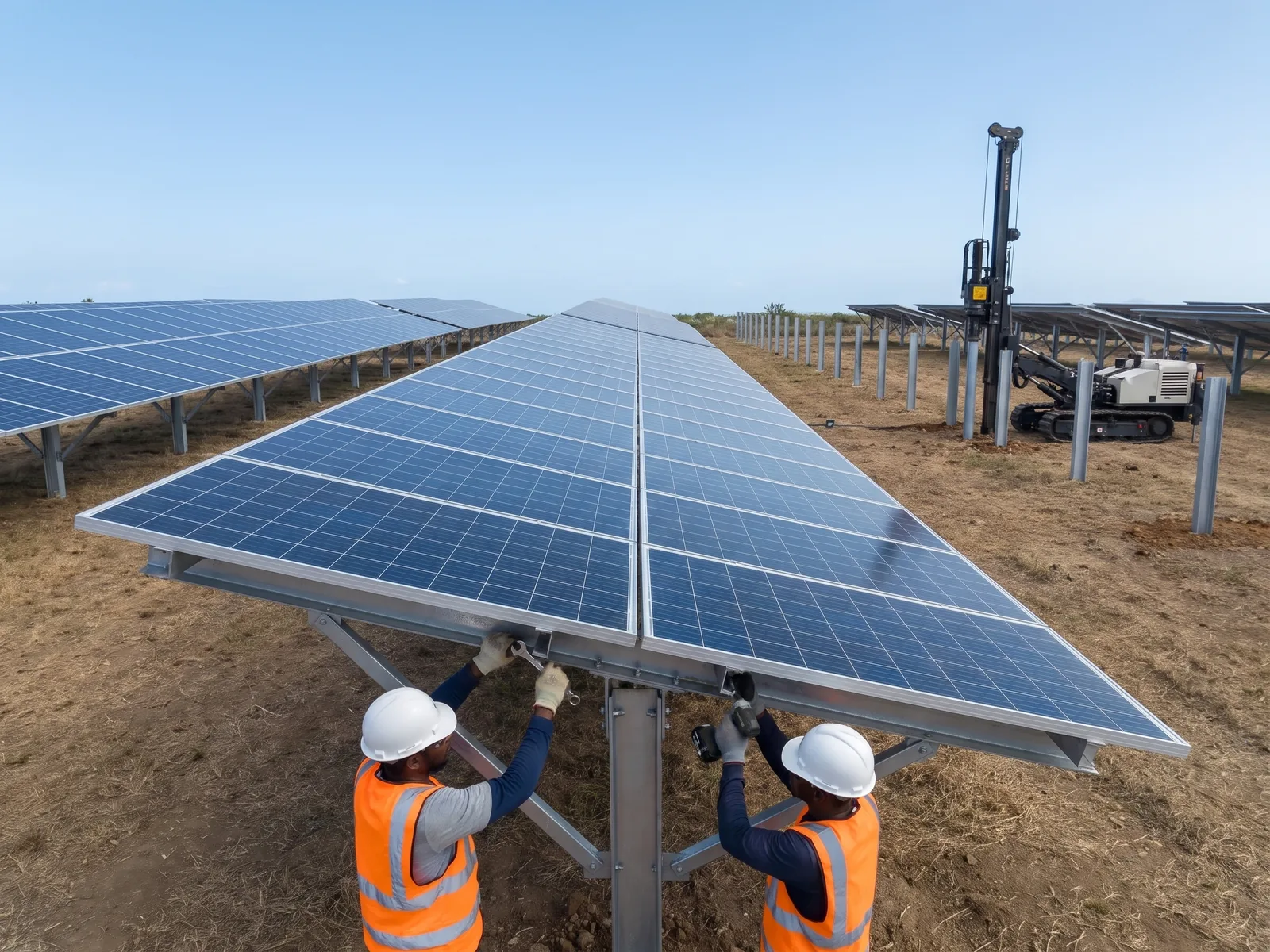
The largest electrical parts can take longer to arrive than the plant takes to build, so they are ordered early. On site, the structure is designed above the code minimum for Caribbean hurricanes.
What the storms taught.
On St Croix, arrays designed to code failed at about 104 mph against a design wind of 145 mph. Hurricane Maria did extensive damage to the second phase of Puerto Rico’s Humacao solar farm while it was being built. Beryl damaged about 30% of the panels at Union Island’s solar farm, and Melissa, at 185 mph, did catastrophic damage to Jamaica’s 52 MWp Eight Rivers solar park.
How we build against it.
We design above the code minimum, with the practices RMI found held up after Beryl: through-bolted modules, lateral racking support and vibration-resistant connections, on one post as standard, or two where the site’s wind or soil calls for it. Racking, foundations and corrosion are set out in our ground-mount build details.
Source and notesHide source and notes
Average lead times after order, US market, Q2 2025: Wood Mackenzie (September 2025). Build time for a 150 MW plant: US EIA with Sargent & Lundy (January 2024).
US DOE FEMP with NREL and LBNL, St Croix (February 2023). PREPA, IRP 2019 Appendix 3 (December 2018). CDEMA, Situation Report 2, Hurricane Beryl (3 July 2024; preliminary). NOAA National Hurricane Center (28 October 2025). InterEnergy (8 November 2025). RMI, Solar Under Storm III (2025).
Proven before handover, run for decades.
Every string is tested, the grid-code tests are passed and the plant’s capacity is proven before it is accepted. Then the work is keeping it close to its first-year output for thirty years or more.
Output, % of the first year (axis starts at 75%)
- 1Commercial operation, once every test is passed
- 2Final acceptance, after a defects warranty of at least two years
- 3Inverters replaced or refurbished, once or twice
- 4Module power warranties end, at 25 or 30 years
- 5Repower, or decommission and recycle
What we hand over.
- As-built drawings and single-line diagram
- String test records to IEC 62446-1
- Infrared survey to IEC TS 62446-3
- Grid-code and protection test results
- Capacity test report (ASTM E2848 or IEC TS 61724-2)
- Monitoring set-up to IEC 61724-1
- O&M manual, warranty and spares register
Source and notesHide source and notes
What developers ask us.
How long does a utility-scale plant take?
Building and commissioning takes about 8 months to 2 years or more from the start of construction; recent Caribbean plants have been given 12 to 18 months or more. Development comes first: about two years for a 150 MW plant in the US EIA’s cost study. The grid connection can take longer still: in US data, plants built in 2025 waited a median of over five years from grid request to operation (LBNL).
Who buys the power?
Usually the national or island utility, under a power purchase agreement, often won in a tender. Jamaica’s Generation Procurement Entity, the Cayman Islands’ regulator and Belize’s utility, with IFC, have each run solar tenders since 2025.
Does a utility plant need storage?
More and more often. Jamaica’s 2026 tender pairs 300 MW of renewables with 150 MW of batteries, the Cayman Islands’ 22.5 MW solar tender comes with batteries, and Puerto Rico’s grid rules name storage as a way to meet its ramp and frequency limits.
What is P90?
The yearly energy a plant should beat nine years in ten. It sits 1.28 standard deviations of the combined uncertainty, typically 8 to 10%, below the P50, the middle estimate. Investors most often require it.
Who checks the work for the lenders?
The lenders’ engineer. Before construction the design and yield are reviewed independently; during construction the lenders’ engineer issues certificates of progress, and lenders release funds against them.
What happens at the end of a plant’s life?
Inverters are replaced or refurbished once or twice along the way. After thirty years or more, the owner repowers, or decommissions and recycles. EU law already sets 85% recovery for solar panels.
Navigating Belize’s Energy Landscape
Belize’s energy rules are changing fast. Our engineers are fully licensed, and our established partnerships keep each project in step with every change, so our clients’ projects are delivered with ease.
PUC Licensed
Titanium Energy’s engineers are fully licensed by the Public Utilities Commission. Every system we build meets Belize’s grid and safety requirements as they stand today.
PUC Collaboration
We work directly with the PUC from feasibility studies to final interconnection approval, so each new rule is part of our clients’ projects from the start.
BTB Partnership
For resort and tourism projects, we coordinate closely with the Belize Tourism Board to align each installation with tourism development and national sustainability priorities.
Cross-Agency Coordination
Our working relationships with the energy ministry, the environment and lands departments and municipal authorities keep permits moving as the rules change.
“For foreign investors and developers, navigating Belize’s regulatory environment can be the biggest project risk. Our established relationships turn that risk into a managed process.”
 Jakob WoodruffCEO
Send us your project.
Five facts are enough for a first answer: what the site can carry, which route to market fits, and what to study first.
- 01Where the land is, and how much
- 02The size in mind, in MW, and any storage
- 03Who buys the power: a utility tender, a PPA or your own use
- 04What’s done: land, studies, a grid request
- 05Your timeline and how you plan to finance it